Problem-Based Learning
Starting from an authentic problem to build knowledge while searching for a solution.
What is it?
Problem-Based Learning presents students with a complex, ill-structured problem before teaching the content. Students identify what they need to know, research, propose hypotheses, and build solutions. The problem is the engine of learning.
Unlike project-based learning, the focus here is not on creating a product but on the process of analysis and resolution. Students learn to think like professionals: a doctor diagnosing, an engineer solving, a historian interpreting evidence.
Originating at McMaster's Faculty of Medicine in the 1960s, the model expanded to all disciplines. Its strength is that it develops critical thinking, collaboration, and autonomy simultaneously.
Real problems don't come with instructions. Learning to navigate uncertainty is as important as finding the answer.
— Howard BarrowsWhat does it look like in class?
The teacher presents a real case: a nearby river is contaminated. What is happening? What can we do? Students work in teams to investigate causes, analyze data, and propose evidence-based solutions.
In a contextualized math problem, students receive real data on the school's energy consumption and must calculate how to reduce it by 20%. There is no single correct solution — there are multiple valid approaches.
The teacher acts as tutor: gives no answers but asks questions that deepen analysis. What evidence do you have? What else would you need to know? Is there another way to look at it?
Teams present their solutions to the group. Different approaches to the same problem are compared and the class discusses what criteria make one solution better than another.
Signs it works
- Students identify on their own what knowledge they lack to solve the problem
- Genuine debates arise about different solution approaches
- Students independently search for information and evaluate it critically
- The resolution process matters as much as the final answer
- Students transfer what they learned to new problems without being told to
Common mistakes
Presenting problems that are too simple or have a single solution — the problem must be genuinely complex
Intervening too quickly when students get frustrated — uncertainty is part of the process
Not providing enough structure for research — students need scaffolding, not abandonment
Confusing Problem-Based with Project-Based Learning — they are complementary but have different focuses
Key thinkers
Neurologist and educator who created PBL at McMaster's Faculty of Medicine. His model revolutionized medical education and spread to all disciplines.
Author of Problem-Based Learning: An Inquiry Approach. Adapted PBL to the school context with emphasis on inquiry.
Leading PBL researcher in higher education. Her work focuses on how PBL transforms students' identity as learners.
Dive deeper
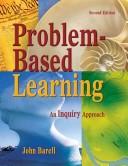 BookProblem-Based Learning — John Barell
Practical guide to implementing PBL in the classroom. Adapted to the school context with examples by educational level.
ESWebsitePBL — Universidad Politecnica de MadridComplete methodological guide in Spanish with steps, roles, and evaluation criteria for PBL.
ESWebsiteProblem-Based Learning — EdutekaArticle in Spanish with differences between PBL and PBL (projects), and implementation guide.
ESVideoWhat is PBL? — Pontificia Universidad Católica de ChileVideo in Spanish on how to design authentic problems for the classroom.
 ToolCause and Effect
 ToolVenn Diagram
 ToolQuestion Dice
 ToolDebate Cards