Design Thinking
User-centered design process applied to the classroom: empathize, define, ideate, prototype, and test.
What is it?
Design Thinking is a creative problem-solving process from the world of design adapted for the classroom. Students learn to understand a real problem, generate many possible ideas, build quick prototypes, and improve them based on feedback.
The process has 5 stages: Empathize (understand the person who has the problem), Define (articulate the problem clearly), Ideate (generate many possible solutions), Prototype (build a quick version), and Test (try and improve with real feedback).
What makes it powerful in education is that it changes the relationship with failure. Prototyping and testing imply that the first version is never the final one. Students learn that iterating is part of the process, not a sign of failure.
Design Thinking is a human-centered process that begins with empathy, advances through creativity, and ends in solutions that truly matter.
— Tim BrownWhat does it look like in class?
Students interview peers from another grade to understand a real problem during recess. They then define the challenge: How might we make recess more inclusive?
In the ideation phase, each group generates 20 ideas in 5 minutes using sticky notes. Quantity is prioritized over quality. Then they vote on the 3 most promising ones.
With simple materials (cardboard, tape, markers), students build a prototype of their solution in 30 minutes. It does not have to be perfect — it has to communicate the idea.
They present the prototype to the original users and receive feedback. They go back to iterate with the suggestions. The cycle repeats until the solution actually works.
Signs it works
- Students begin asking 'Who are we designing this for?' before proposing solutions
- They feel comfortable discarding their own ideas when feedback shows they don't work
- They generate many ideas before choosing one — they don't stick with the first
- Prototypes become more sophisticated with each iteration
- Students spontaneously apply the process to problems outside the classroom
Common mistakes
Skipping the empathy stage and going straight to solutions — without understanding the problem, solutions are superficial
Making prototypes too elaborate — the prototype should be fast and disposable
Treating the 5 stages as a linear process — in practice you move back and forth between stages
Not including real user feedback — testing only within the group eliminates valuable perspectives
Key thinkers
CEO of IDEO and author of Change by Design. Popularized Design Thinking as a methodology applicable to any field.
Founder of IDEO and the d.school at Stanford. Promoted the idea that creativity can be taught and practiced.
Educator who adapted Design Thinking to the school context with his 'Design Thinking for Educators' framework.
Dive deeper
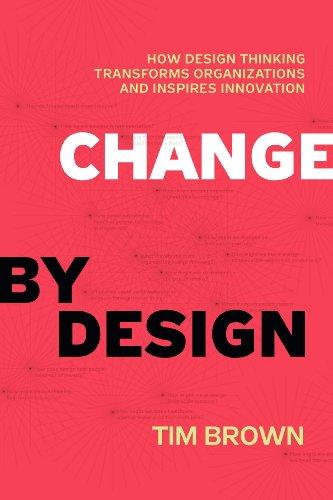 BookChange by Design — Tim Brown
The reference book by the IDEO CEO on Design Thinking applied to real problems.
PDFDesign Thinking for Educators — IDEOFree toolkit from IDEO with the complete process adapted for education. Available in Spanish.
Websited.school Stanford — Free ResourcesGuides, templates, and exercises from the Stanford design school.
WebsiteDesign Thinking in Education — EdutopiaCollection of articles and videos on Design Thinking in the classroom.
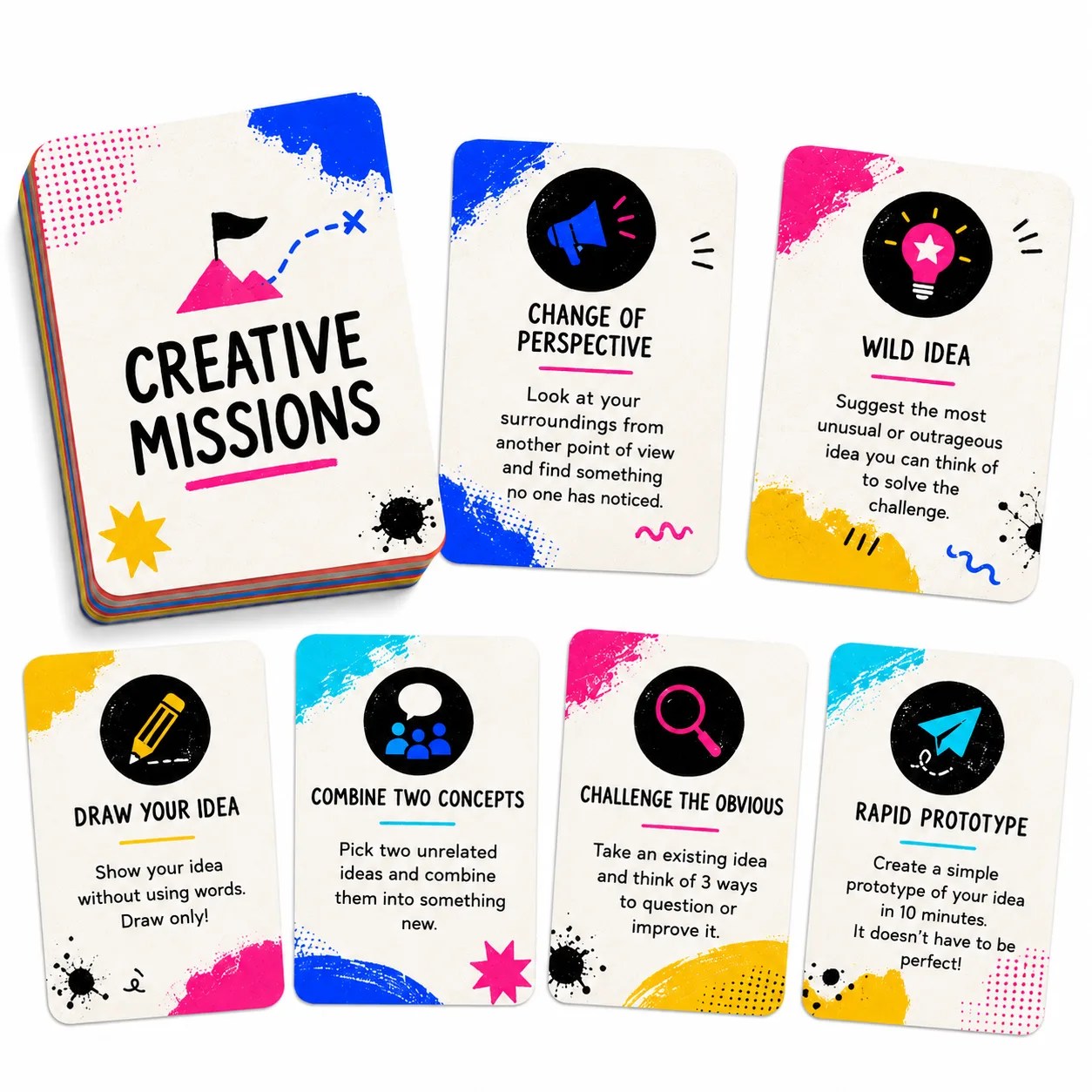 ToolCreative Mission Cards
 ToolKanban Board
 ToolCollaborative Ideas Wall
 ToolPriority Voting