Why group work fails (and it is not students’ fault)
The scene repeats itself in thousands of classrooms: the teacher says “form groups of four” and what follows is predictable. Two students do all the work, one copies at the end and the fourth disconnects. At the finish, the teacher gives the same grade to all four and those who worked feel the effort was not worth it.
The problem is not the students — it is the structure. In most cases, the teacher proposes group work without defining roles, without establishing individual responsibilities and without designing interdependence among members. Saying “work together” is not designing a collaboration experience, in the same way that saying “read the chapter” is not designing a reading experience.
When a group has no structure, predictable patterns appear: the free rider effect, where one or two lean on others’ work; diffusion of responsibility, where nobody feels ownership of any task; and social dominance, where the most extroverted person makes all the decisions. These are not attitude problems — they are natural consequences of an absent design.
The theory behind the practice
David and Roger Johnson, researchers at the University of Minnesota, have spent more than four decades studying cooperative learning. Their work has identified five elements that distinguish effective group work from ineffective (Johnson & Johnson, 1999):
Individual success depends on group success. If one fails, everyone is affected.
Each member is accountable for their part of the work. There is nowhere to hide.
Members help, explain, discuss — they do not simply divide the task and put it together at the end.
Collaboration is taught explicitly: listening, negotiating, managing disagreements.
The team reflects on how it worked and what it can improve.
When these five elements are present, the results are consistent. Robert Slavin (1995), in his review of 99 studies, found that structured cooperative learning outperforms individual work with an effect size of approximately 0.5 standard deviations — equivalent to moving from position 50 to 69 in a performance ranking. But the key word is structured: simply putting students together does not produce these effects.
A group is not the same as a team
The difference between a group and a team is not semantic — it is functional. A group is a collection of people; a team is a group with structure, roles and a shared objective that can only be achieved with everyone’s contribution.
| Group | Team | |
|---|---|---|
| Interdependence | Low or none — each can do their own part | High — the result requires everyone’s pieces |
| Roles | Implicit or absent | Explicit and rotating |
| Accountability | Diffused in the collective | Individual and visible |
| Social skills | Assumed as given | Taught and practiced |
| Process reflection | Does not occur | Is part of the work |
The teacher’s goal is not to form groups — it is to convert groups into teams. And that conversion does not happen spontaneously: it requires design.
How to build groups that work
With 2 there is not enough diversity of perspectives. With 5 or more, participation becomes diluted and it is easier to disconnect. Johnson and Johnson (1999) research aligns with practice: 3 for brief tasks, 4 for more complex projects.
When students choose their own groups, they group by friendship. This reinforces existing social islands, leaves out the less popular and does not develop the capacity to work with different people. Randomly assigned groups produce better academic and social results (Webb, 1991).
For one or two class activities, a new group works well. For multi-week projects, keeping the same team allows social skills and trust to develop. The general recommendation is to keep teams for 3 to 6 weeks and then rotate.
Assigning roles is not bureaucracy — it is the mechanism that makes visible who does what. Classic roles: coordinator (manages time and the agenda), recorder (documents decisions), researcher (looks for information), communicator (presents to the rest of the class). Roles must rotate between activities so everyone practices all the functions.
Free tools for each phase of group work
Each phase of team work — forming, working, closing — has different needs. The tools mentioned in this guide are available on this site, are free and require no registration or download.
Group Generator — formation phase
Builds teams at random in seconds. Enter the student list, choose the number of members per group and the tool distributes them. Eliminates the negotiation at the start (“can I go with Sofia?”) and guarantees everyone has a team. It is especially useful when the teacher wants to break habitual groupings without it seeming arbitrary — randomness is neutral.
Role Cards — formation phase
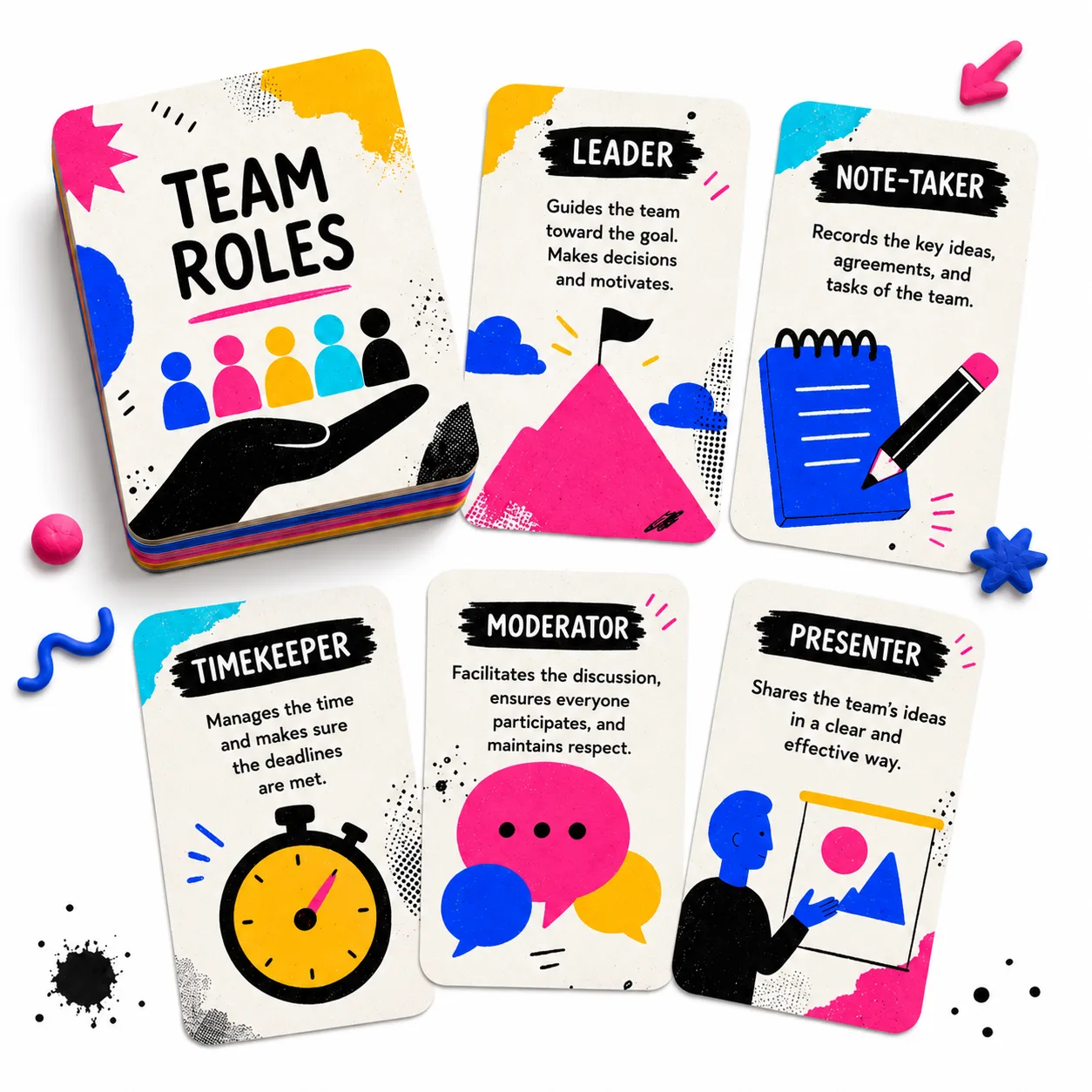
Once teams are formed, each member receives a role with clear responsibilities: coordinator, recorder, researcher, communicator. The card describes what is expected of that role during the activity. This resolves the most common problem in group work: nobody knowing exactly what they are supposed to do. Roles should rotate with each new activity so everyone develops all functions.
Kanban Board — work phase
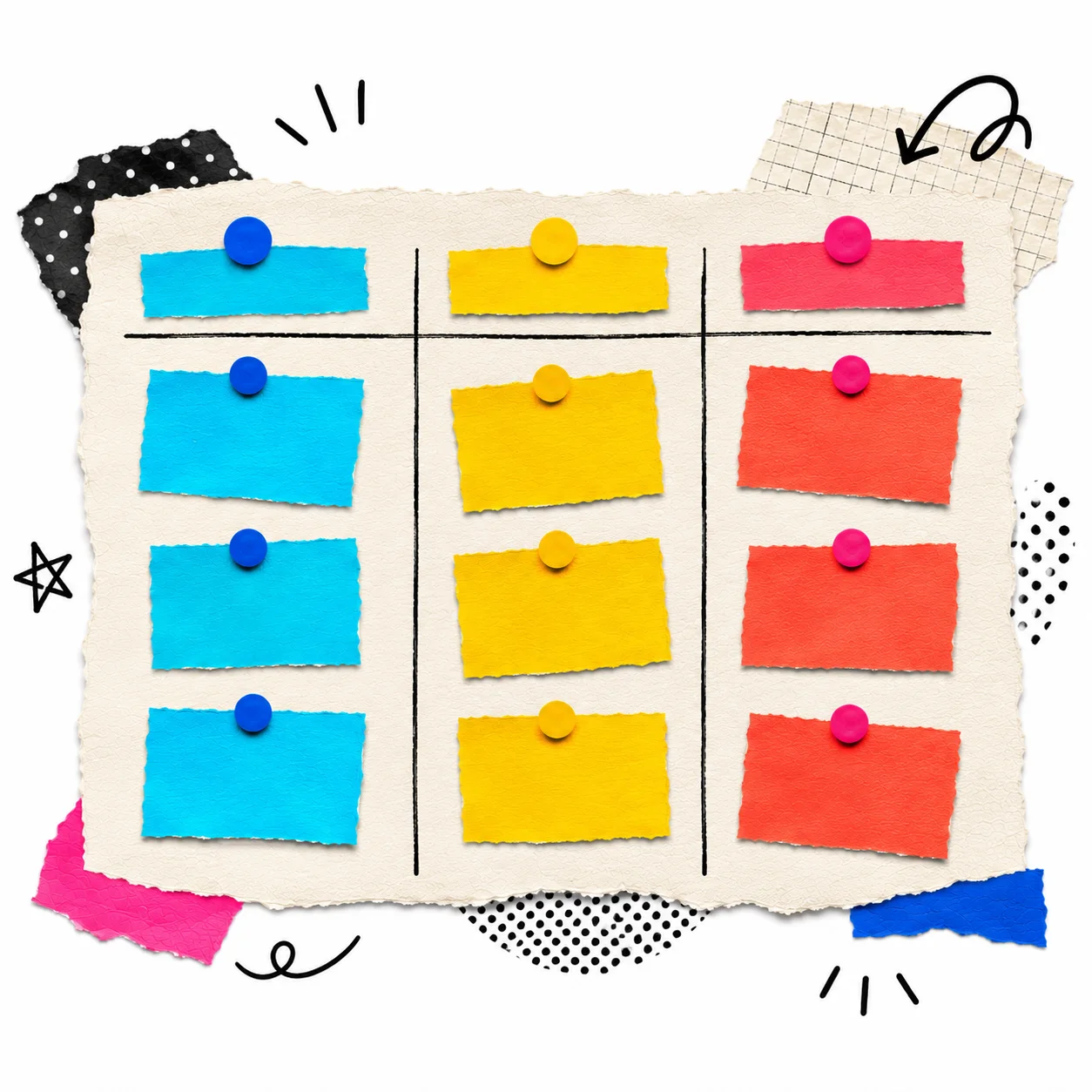
The team organizes their tasks in three columns: pending, in progress and done. Each task has a visible owner. This transparency solves two problems at once: allows the teacher to see the real distribution of work without asking, and allows the team members themselves to identify if someone has too many tasks or too few.
Priority Voting — work phase
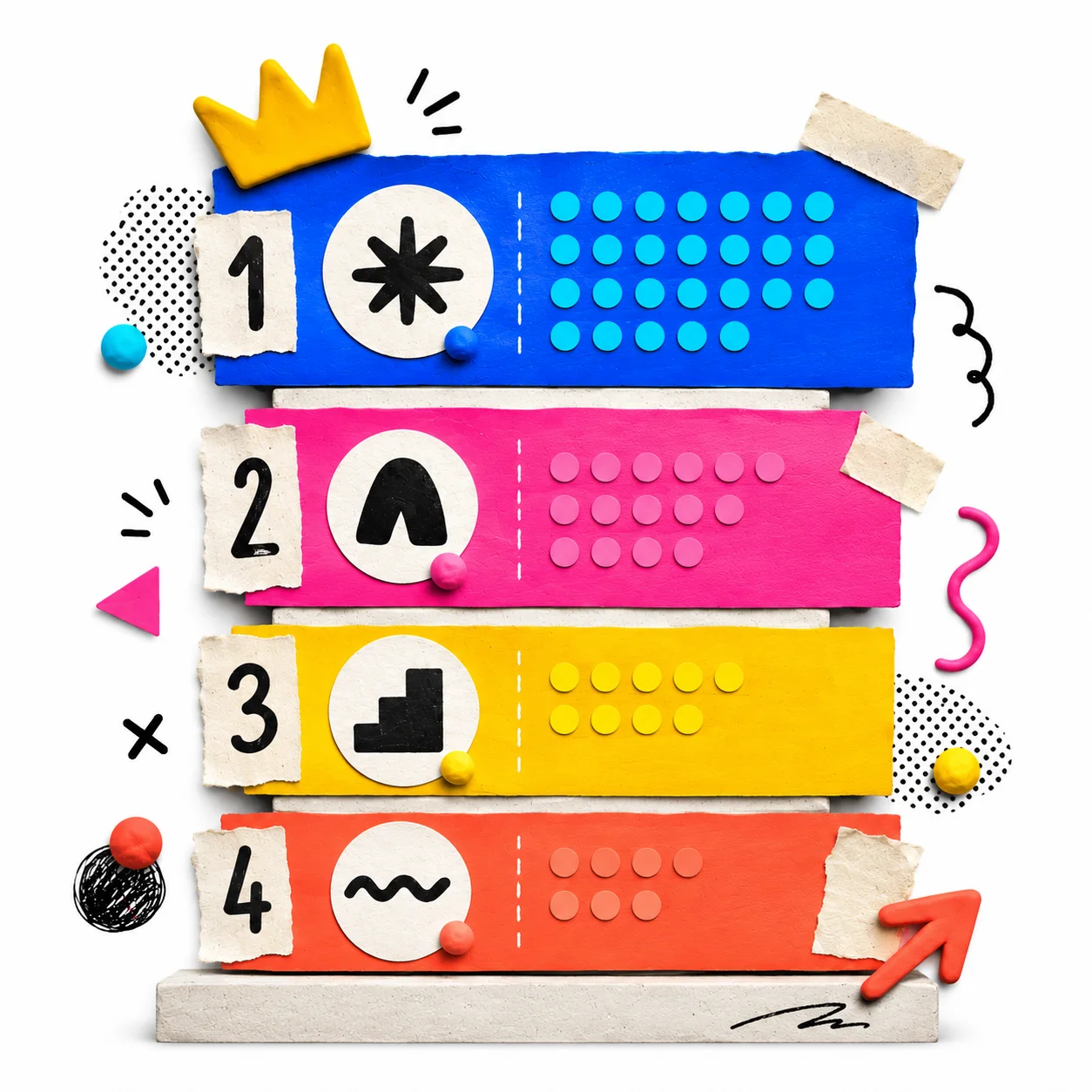
When the team must decide what to do first, each member votes. This prevents decisions from always being made by the most vocal or the one with the most social authority in the group. It is a concrete practice of democratic decision-making that also leaves a record of how the decision was reached.
Visual Timer — work phase
Each phase of the activity has a visible time for the whole group. This avoids the frequent problem of the team spending 30 minutes discussing and 3 minutes producing. The teacher can structure the time: 5 minutes to plan, 15 to produce, 5 to review. The projected timer generates gentle pressure that maintains the pace without constant intervention.
Work Gallery — closing phase
Each team exhibits their product and the rest of the class browses, observes and leaves comments. It is an alternative to the traditional oral presentation — which tends to be monotonous when repeated six times in a row — and has an additional advantage: the work has a real audience. Students produce with more care when they know others will see and comment, not just the teacher.
Common mistakes
Always letting them choose their own groups. It seems democratic but reinforces the classroom’s social hierarchies. Less popular students are systematically left out or are the last to be chosen. Groups by affinity are comfortable but do not develop the capacity to work with different people — which is exactly the competency the working world demands.
Not assigning roles. Without explicit roles, the most responsible student ends up doing everything and the rest lean on that effort. Elizabeth Cohen’s (1994) research on status treatments demonstrates that roles redistribute participation and reduce status differences within the group.
Grading only the group product. If the grade is identical for everyone, there is no incentive for individual accountability. The solution is to combine group evaluation with individual evaluation: the product has a team grade, but each member is also evaluated for their contribution (through self-assessment, co-evaluation or individual evidence such as a kanban record).
Intervening too early. When the teacher resolves every conflict as soon as it appears, the group does not develop negotiation skills. The initial discomfort is part of the learning. It is better to observe, let the team try to resolve the problem and only intervene when the conflict escalates or when the group clearly lacks the tools to handle it.
What competencies it develops
Structured teamwork not only produces better academic results — it also activates transversal competencies at concrete moments:
- When members divide tasks, agree on quality standards and help each other, they are exercising collaboration in its most concrete sense: producing together something none could produce alone.
- When the coordinator manages time, redistributes tasks and keeps the team focused, they are practicing leadership — not as authority, but as service to the group.
- When two members want different approaches and must reach an agreement without one imposing their position, they are developing negotiation and mediation.
- When the communicator presents the team’s work to the rest of the class, they are practicing oral expression with a real audience and a genuine product.
- When a member paraphrases another’s idea before responding, they are exercising active listening — the foundation of any productive conversation.
How to start
There is no need to implement all tools at once. A gradual progression allows both teacher and students to develop collaborative work habits:
Use the group generator to build teams at random and role cards to assign responsibilities. With just these two elements, the dynamic changes.
Incorporate the kanban board so the team visualizes their tasks and the visual timer to manage time for each phase. This makes transparent who does what and how much time remains.
Use the work gallery as a closing moment where each team exhibits and receives feedback from peers. This gives the work a real audience and raises the quality of the product.
The key is not the number of tools but the consistency of the structure. A team with clear roles, visible tasks and defined time works better than a group with the best intentions but no design.