The name is the first problem
“Soft skills” is a misleading term. It suggests that these capacities are optional, secondary or easy to develop — in contrast to “hard” ones, which would be the ones that really matter. None of these three things is true.
The skills grouped under that name — communication, collaboration, emotional regulation, conflict resolution, critical thinking — are not soft in any sense. They are difficult to teach, difficult to assess and difficult to maintain under pressure. What they are is transversal: they do not belong to a specific subject, but cut across all of them.
The World Economic Forum calls them “21st century skills.” The OECD talks about “social and emotional competencies.” The CASEL framework groups them as “social-emotional learning.” None of these frameworks uses the word “soft” — and that is not a coincidence.
What they include and what they do not
Soft skills are not a fixed list. Depending on the framework used, they include between 10 and 40 different capacities. For the classroom, it makes sense to organize them into four groups:
| Group | What it includes | Why it matters in the classroom |
|---|---|---|
| Self-management | Emotional regulation, time management, perseverance, growth mindset | A student who cannot regulate their emotions cannot learn under pressure |
| Communication | Active listening, oral expression, assertive communication, storytelling | Most learning occurs in conversation with others |
| Thinking | Critical thinking, creativity, problem-solving, decision-making | Content is forgotten; the ability to think with that content stays |
| Relationship | Collaboration, empathy, leadership, negotiation | Students spend years learning alongside others — that is also education |
Why they do not develop on their own
The idea that soft skills are learned “through life” is the equivalent of saying that mathematics is learned “with time.” Some people develop them without explicit instruction — but most do not, and those who do not carry that disadvantage for decades afterward.
Durlak et al. (2011) analyzed 213 social-emotional learning programs with more than 270,000 students and found that those that included explicit instruction in these skills showed an average improvement of 11 percentiles in academic performance — not because time was taken from content, but because the emotional and social conditions of learning improved.
The problem is that most schools assume these skills will develop through exposure: if students work in groups, they will learn to collaborate; if they read argumentative texts, they will learn to argue. The evidence shows that is not the case. Exposure without instruction produces variability: some develop them, most do not.
How to teach them without adding a new subject
The most common mistake is thinking that to teach soft skills one needs a specific hour, a separate program or an outside specialist. Most soft skills can be worked on within existing classes, by changing the activity format — not the content.
When students work in a group, collaboration occurs (well or poorly) implicitly. Making it explicit means naming it: "today we are going to work as a team and we are also going to review how we did it." A simple process rubric, a closing reflection or a question about how the group functioned turns the activity into learning of the skill.
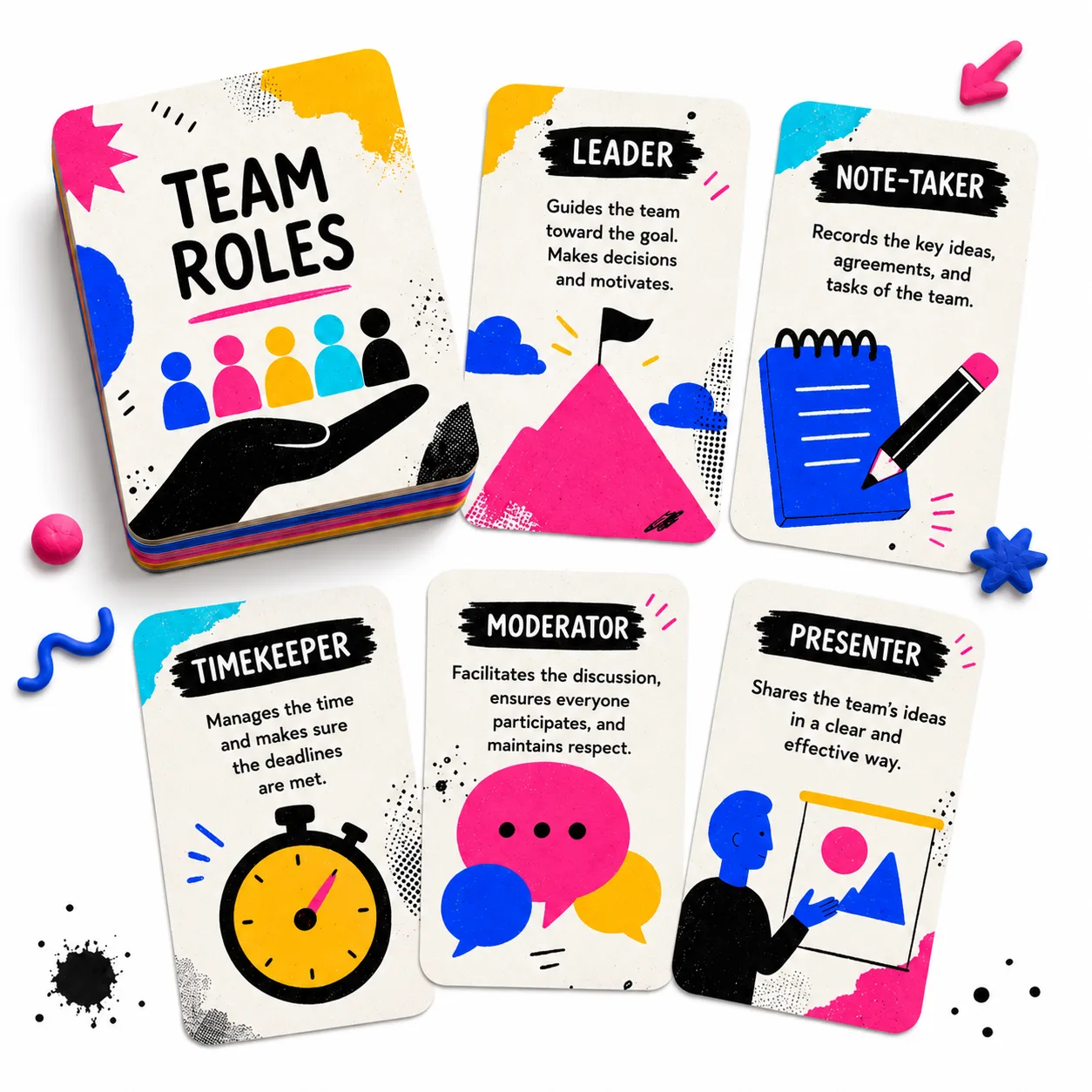
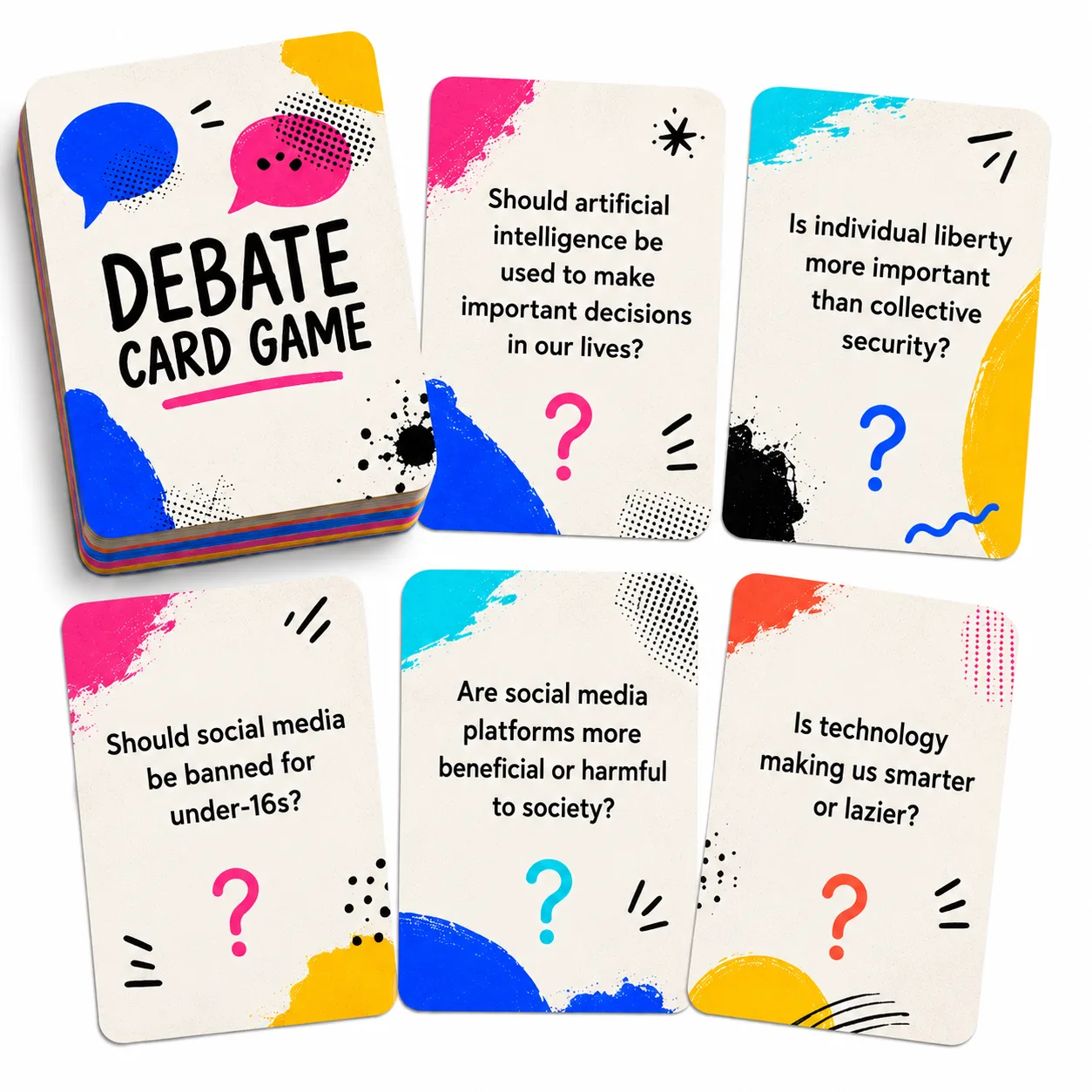
A debate about climate change can teach natural science. If designed with roles, listening norms and a final reflection, it also teaches argumentation, active listening and emotional regulation. Content is the vehicle; the skill is the destination. Both can coexist in the same activity.
Students cannot be asked to give constructive feedback if they have never seen how it is done. They cannot be asked to resolve conflicts if nobody showed them the process. A teacher who models aloud how they think, how they manage an emotion or how they give feedback is teaching the skill more directly than any theoretical explanation.
Soft skills are not visible as they grow. Unlike mathematics, where the student can compare what they knew last month with what they know now, collaboration or emotional regulation are invisible without a tracking system. Clear criteria, periodic self-assessments and process portfolios make visible the advances that otherwise nobody — not even the student — perceives.
What competencies it develops
Soft skills are not a separate category: they are the popular name for the transversal competencies organized by groups on this site. The most central ones to work on in the classroom:
- The ability to recognize, understand and manage one’s own emotions is emotional intelligence — the foundation of almost everything else.
- Working with others productively, dividing tasks and sustaining agreements is collaboration.
- Expressing ideas, needs and limits clearly and respectfully, without aggression or passivity, is assertive communication.
- Managing one’s own emotional reactions in the face of difficulty or conflict is emotional regulation.
- Placing oneself in another’s position and understanding their perspective even if one does not share it is empathy.
- Identifying obstacles and finding possible paths when there is no obvious answer is problem-solving.
- Influencing a group toward a shared goal, motivating and making collective decisions is leadership.
- Adjusting quickly to new contexts, tasks or people without losing effectiveness is adaptability.
What the evidence says about which to prioritize
Not all soft skills have the same impact. The most solid research identifies three as having the greatest effect on academic performance, relationships and long-term wellbeing:
Emotional regulation. Students who can manage frustration, anxiety and boredom learn more — not because they are more intelligent, but because they are available to learn. A brain in threat mode does not process new information.
Growth mindset. Believing that intelligence develops with effort (Dweck, 2006) predicts academic performance better than baseline IQ. And it is teachable: two-hour interventions have produced measurable improvements in high-risk populations.
Collaboration skills. The world of work, civic life and the family require working with others. Students who learn to divide tasks, negotiate roles and sustain agreements under pressure have an advantage that no grade can replace.