Inclusion is not just being in the classroom
A student with dyslexia sits in the same class as the rest. They receive the same instructions, with the same font, in the same time. When they do not finish, the teacher says “do what you can.” They are physically included, but pedagogically excluded.
Another teacher, in the same school, offers the instructions in two formats (text and audio), allows the student to choose how to demonstrate what they learned (written, oral or visual) and gives them a visible timer to manage their time. The student learns the same as the others — but by a path that works for them.
The difference is not the diagnosis or the resources — it is the design. Real inclusion does not occur when the student “is” in the classroom. It occurs when the class is designed so they can learn.
The theory behind the practice
Universal Design for Learning (UDL), developed by CAST (Rose & Meyer, 2002), proposes three principles: offering multiple means of representation (how information is presented), multiple means of action and expression (how students demonstrate what they know) and multiple means of engagement (how they are motivated). The central idea is that the barriers are not in the student — they are in the design of the class.
Collicott (1991) developed multilevel teaching as a response to the most frequent teacher question: “How do I teach the same class for students with such different levels?” The answer: design an activity with multiple levels of complexity where everyone works on the same topic but with different degrees of depth.
Fuchs and Fuchs (2006) systematized Response to Intervention (RTI) in three levels: quality instruction for all (level 1), focused support for some (level 2) and intensive intervention for few (level 3). The model shows that most students with difficulties respond well to level 1 if the teaching is well designed — the problem is rarely the student.
Designing for variety, not adapting for the exception
| Traditional approach | Inclusive approach |
|---|---|
| Design for the average and adapt for “the special” | Design from the start for variety |
| Adaptation is a later patch | Flexibility is built into the design |
| The teacher makes an “easier” version | The student chooses between equivalent options |
| Signals the difference | Normalizes multiple pathways |
| Depends on a diagnosis to act | Benefits everyone, not only the diagnosed |
The paradigm shift is subtle but fundamental: instead of designing a class for 25 and then adapting it for 3, design a flexible class that works for 28.
Three levels of practical inclusion
Level 1: Flexibilize the format (for everyone)
Without changing the content or objectives, offer options in how students access information and demonstrate what they learned:
- Access: the instructions are available in text, audio and with visual support. Not only for students with special needs — anyone chooses the format they prefer.
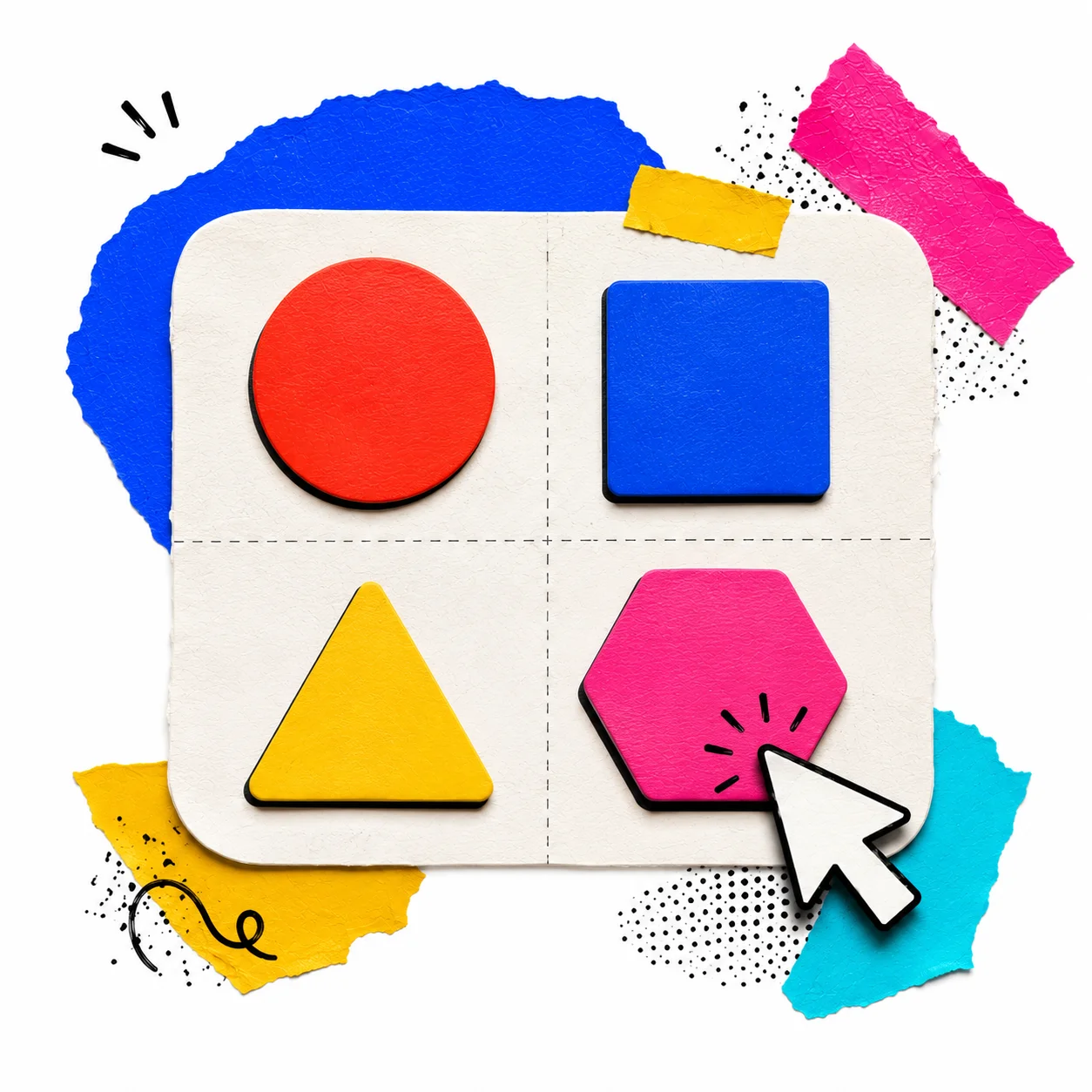
- Production: use a choice board with 4–6 ways to demonstrate learning. “Explain the concept” can be a written text, a drawing with annotations, an audio recording or a diagram. All options evaluate the same objective.
- Time: a visual timer allows each student to manage their pace. Some need more time — and that is not a problem if it is built into the design.
This level requires no diagnoses, involves no significant extra work and benefits the whole class.
Level 2: Scaffold the complexity (for some)
For students who need more support, add scaffolds that reduce the complexity of the task without reducing the learning:
- Support structures: instead of “write a paragraph,” offer an organizer with a sentence starter: “The most important concept is ___ because ___.” The student completes, not invents from scratch.
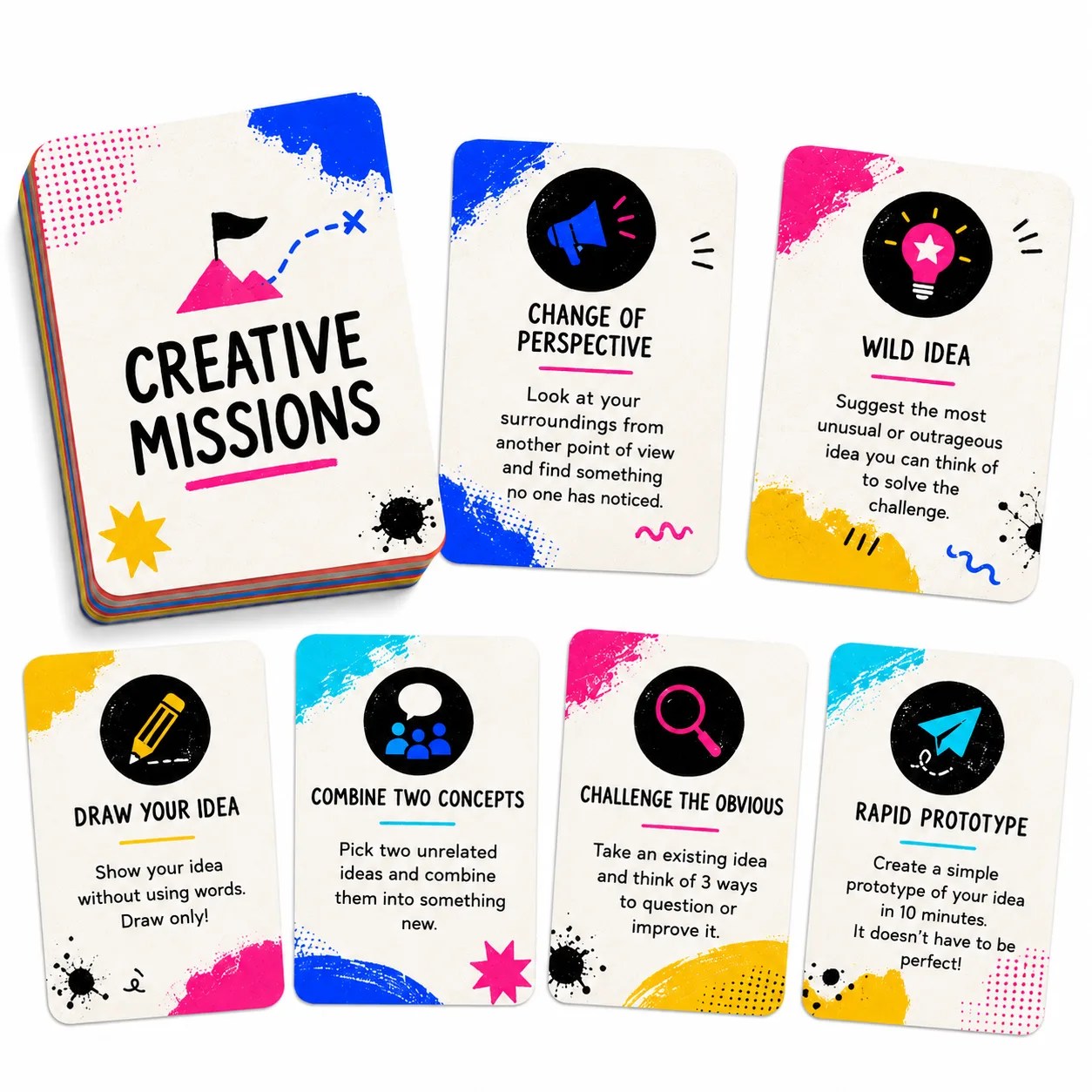
- Task decomposition: a 5-step task is presented as 5 one-step tasks. Creative mission cards work well here: each mission is a sequential micro-challenge.
- Peer support: pair students with complementary levels. Not as “tutor and tutored” — as partners who help each other with their respective strengths.
Level 3: Focused intervention (for few)
For students with more intensive needs, the teacher works directly while the rest works autonomously (stations, group work, individual activity):
- The teacher sits with a small group (2–4 students) for 10–15 minutes.
- The rest of the class functions with self-directed activities.
- The comprehension stoplight allows the teacher to monitor the rest from where they are: if they see red in another group, they know they need to intervene.
This level requires the teacher to master autonomous work formats (stations, choice board) to free up direct attention time.
Frequent profiles and practical responses
Reading and writing difficulties (dyslexia, dysgraphia)
- Offer instructions in audio as well as text
- Allow recorded oral responses
- Use clear typography, wide spacing, cream background
- Give extra time without drawing attention (individual timer)
- Accept diagrams and concept maps as valid products
Attention difficulties (ADHD)
- Divide long activities into short blocks with breaks
- Use the visual timer to make time concrete
- Offer space to move (learning stations)
- Reduce visual stimuli in materials
- Anticipate transitions: “In 2 minutes we change activity”
Communication difficulties (ASD, selective mutism)
- Offer the collaborative ideas wall for participating in writing
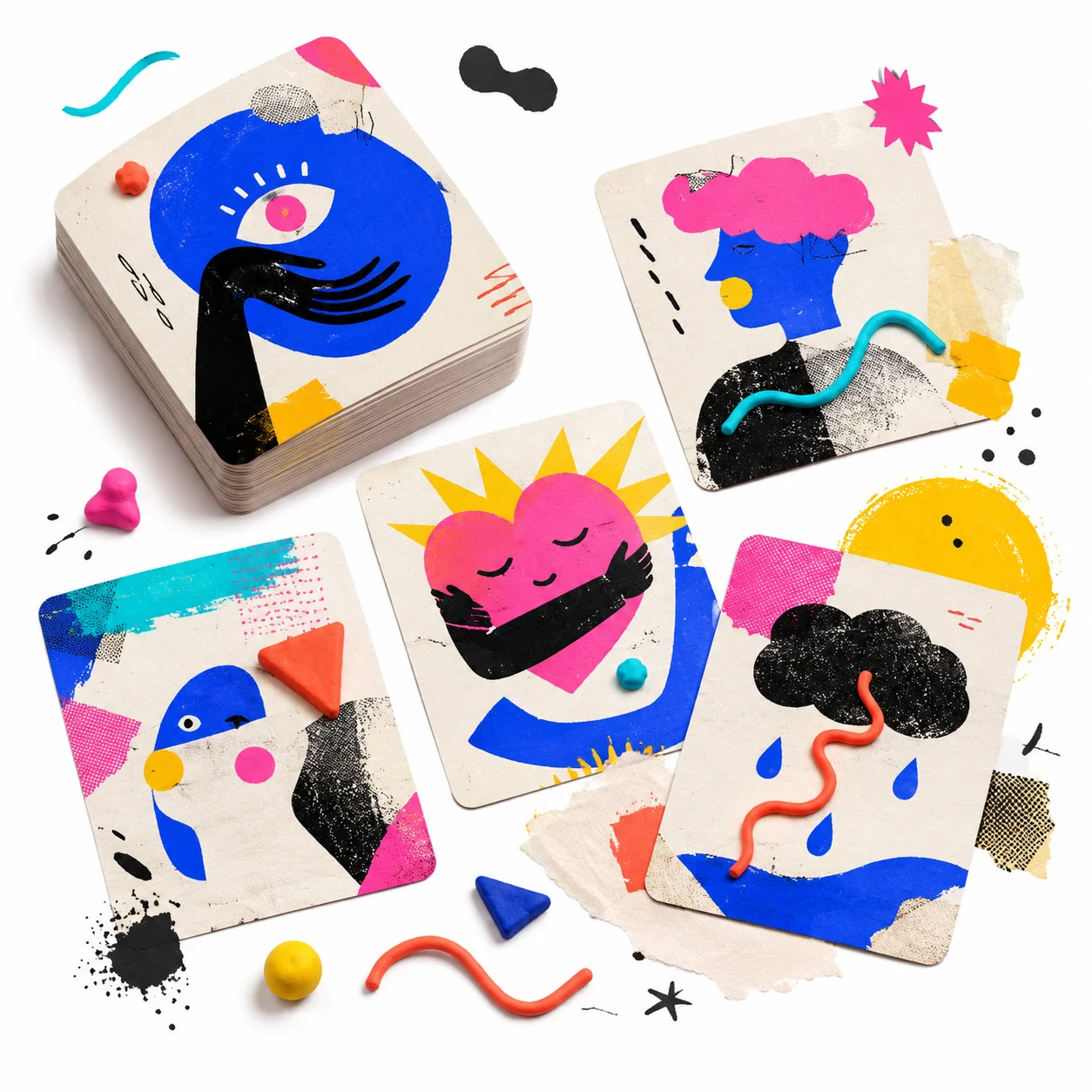
- Use the emotions deck as a non-verbal expression channel
- Anticipate what will happen in the class (visual agenda)
- Allow headphone use if noise generates overload
- Respect silence as a valid form of processing
Students with high capacities
- Offer depth stations in the choice board
- Assign roles of greater complexity (designer, researcher)
- Propose creative mission cards with open challenges
- Avoid giving “more of the same” — give “different and deeper”
Free tools for inclusion
Choice board — multiple paths, same destination
It is the most powerful tool for inclusion without singling out. When all students choose how to demonstrate their learning, nobody is marked as “the one who needs an adaptation.” The student with dyslexia chooses to record an audio. The one with high capacities chooses the most complex challenge. The one who needs more structure chooses to complete an organizer. Everyone reaches the same objective.
Comprehension stoplight — asking for help without exposure
For many students with special needs, asking for help aloud is a barrier. The stoplight allows signaling red discreetly. The teacher sees the signal, approaches and assists without the student having to raise their hand in front of 30 classmates. It is dignity applied to classroom management.
Visual timer — making time concrete
Abstract time is a barrier for students with attention difficulties or anxiety. “You have 20 minutes” means nothing concrete. A projected timer that counts down converts time into something visible and manageable. It reduces the anxiety of “how much is left?” and helps regulate the pace of work.
Emotions deck — expressing without words
For students with communication difficulties, choosing a card that represents how they feel is a valid and complete form of participation. It is not a lesser substitute for speaking — it is a legitimate channel of expression. It works as an opening ritual to take the group’s emotional pulse without forcing verbalization.
Collaborative ideas wall — participating from safety
Posting an idea anonymously eliminates the barriers of public exposure, processing speed and social pressure. Many students with special needs have valuable ideas they do not express because the format does not allow them to. The wall gives them a space.
Creative mission cards — different paths to the same objective
Each mission offers a challenge with a different narrative and product. The same science content can be explored by building a model, writing a story, designing an experiment or creating a diagram. The variety of formats is structural inclusion.
Common mistakes when including
Confusing inclusion with simplification. “For Juan I lower the level” is not inclusion — it is underestimation. Inclusion is offering a different path to the same objective, not a lower objective.
Waiting for a diagnosis to act. Many students with support needs do not have a formal diagnosis. Level 1 strategies (flexibilizing format, offering options) benefit everyone and require no paperwork.
Signaling the adaptation. “This is for Juan who has dyslexia” destroys what it tries to build. When the option is available for everyone, nobody is singled out. The choice board normalizes differences instead of exposing them.
Delegating inclusion to the support team. Inclusion is not the responsibility of the support professional — it is the classroom teacher’s responsibility. The support professional is a resource, not a replacement. The inclusive class is designed in planning, not in referral.
Thinking inclusion is only for students with disabilities. Variety in the classroom includes students with different cultures, languages, prior experiences, rhythms, processing styles and personal circumstances. Designing for variety benefits everyone, not only those with a certificate.
What competencies it develops — in the whole class
Inclusion not only benefits students with special needs — it transforms the entire classroom culture:
- When a student sees their classmate learning differently and that is treated naturally, they are developing respect for diversity from experience.
- When they choose between multiple formats and discover which one works best for them, they are exercising self-awareness — knowing how they learn.
- When a peer helps another without condescension, they are practicing real empathy — not the kind in speeches, but in action.
- When the group gets accustomed to “there are many ways to reach the same place,” they are internalizing adaptability as a value.
- When a student who usually felt outside the group discovers they can participate and contribute, they are building sense of belonging — the foundation of all learning.
How to start
For the next activity, offer two ways to demonstrate learning instead of one. "You can write a paragraph or make a diagram with annotations." One single alternative already changes the logic.
For one activity, offer 4 equivalent options in difficulty but different in format. Observe who chooses what and why. The board is not only an inclusion tool — it is a diagnostic tool.
For a complete unit, plan with the three principles: how do I present the information in more than one way? How do I allow students to demonstrate what they know in more than one way? How do I offer more than one way to engage with the topic? No need to change everything — one principle per class is enough to start.
Inclusion is not a gesture of kindness — it is a right. And it is not extra work — it is different work. Designing for variety from the start is more efficient than adapting afterward for each individual case.