The inverted class: the idea and the problem
In a traditional class, the teacher explains in the classroom and the student practices at home. The flipped classroom proposes the opposite: the student accesses the content before class (video, reading, podcast) and in-class time is dedicated to applying, discussing, problem-solving and creating.
The idea is powerful: freeing in-class time — the most valuable resource — for activities that genuinely require the teacher’s presence. A video can explain a concept. A teacher guiding a student who is stuck on a problem cannot be replaced.
But between theory and practice there is a gap. Teachers who try to flip the classroom without preparation always encounter the same problems: students do not prepare, class becomes “repeating the video for those who did not watch it,” and in the end they return to the previous model with the feeling that “it does not work.”
The flipped classroom does work — but it requires design, not just a video.
The theory behind the practice
Bergmann and Sams (2012), the chemistry teachers who popularized the model, insisted from the start that the flipped classroom is not about videos — it is about what is done with in-class time. The video is merely the means to free up that time.
A meta-analysis by Hew and Lo (2018) with 28 studies found that the flipped classroom produces moderate improvements in academic performance compared to traditional expository instruction. But the most relevant finding was something else: student satisfaction and engagement increase significantly, especially when in-class time is dedicated to collaborative activities.
What the research also shows is that the critical factor is not the quality of the video but the quality of the task that accompanies it. A video without a task that requires processing it is like assigning a reading without checking that it was read — most students will not do it.
Traditional class vs. flipped classroom
| Traditional class | Flipped classroom | |
|---|---|---|
| At home | Practice (exercises, homework) | First contact with content |
| In class | Teacher’s exposition | Application, discussion, production |
| The teacher | Presents information | Guides activities and resolves doubts |
| The student | Listens and takes notes | Works, asks questions, produces |
| The error | Discovered on the exam | Detected in class, with help |
| Valuable time | Used for what a video can do | Used for what only a teacher can do |
The three pillars of a flipped classroom that works
The material students review before class must be short (5-10 minutes maximum) and come with a required task that demonstrates they processed it. "Watch the video" is not enough. It needs a KWL chart ("before class, complete the first two columns"), some concrete questions or a mini-quiz.
The rule is simple: if there is no task associated with the prior material, students will not do it. Not because they are irresponsible — but because without a task, there is no reason to process it actively.
The first 5 minutes of a flipped class are decisive. The teacher needs to quickly know who prepared and what they understood. A comprehension stoplight ("How clear was the material?") or an exit ticket used at the start ("Write in one sentence the main idea of the video") makes it possible to diagnose in under 2 minutes.
With that information, the teacher decides: do I move directly to the activity? Do I do a 5-minute re-explanation of the point that was not clear? Do I group those who understood well with those who have doubts?
If in-class time is used for silent individual exercises, it was not worth flipping the class. The in-class activity must take advantage of what is only possible with the teacher and classmates present: discussion, complex problem-solving, group production, real-time feedback.
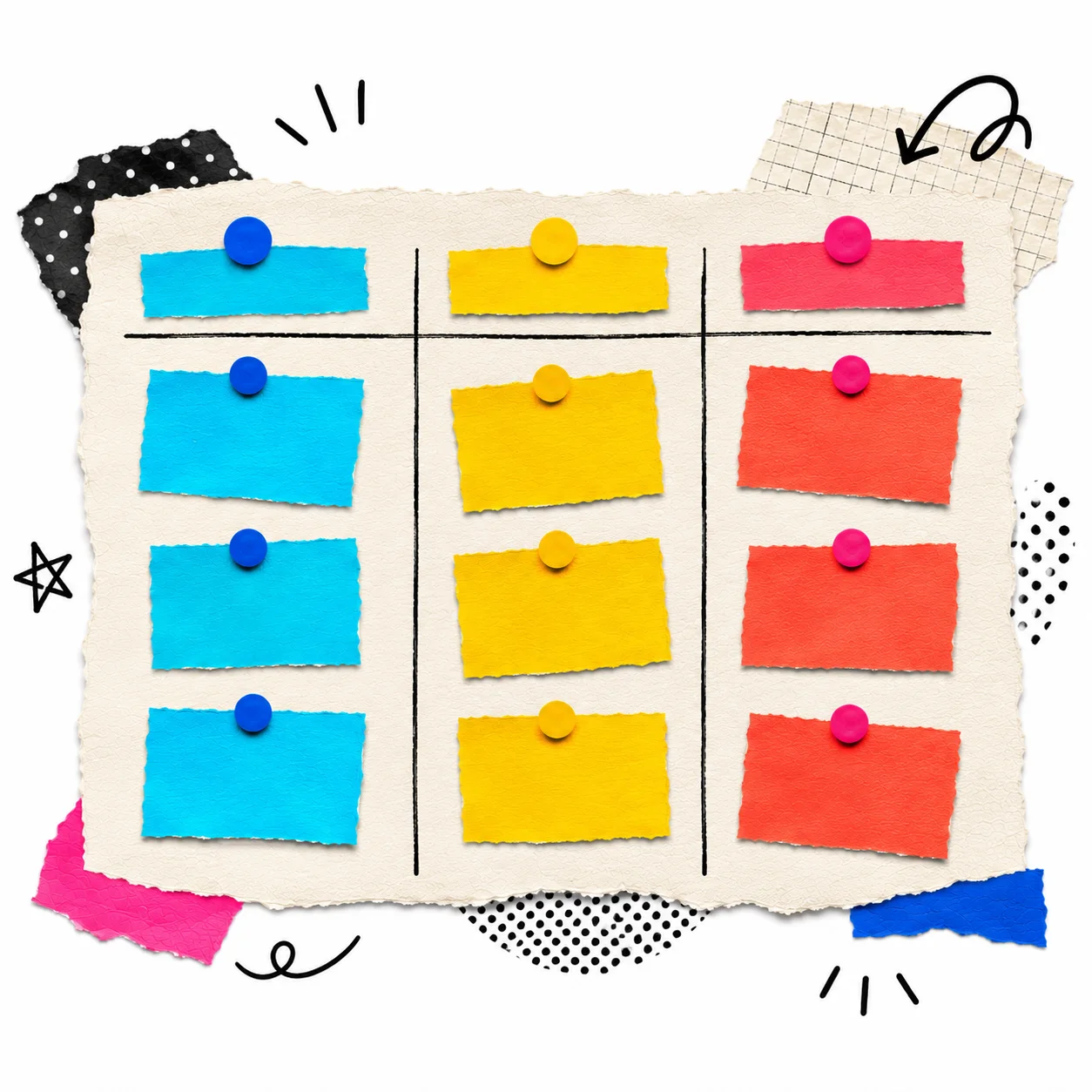
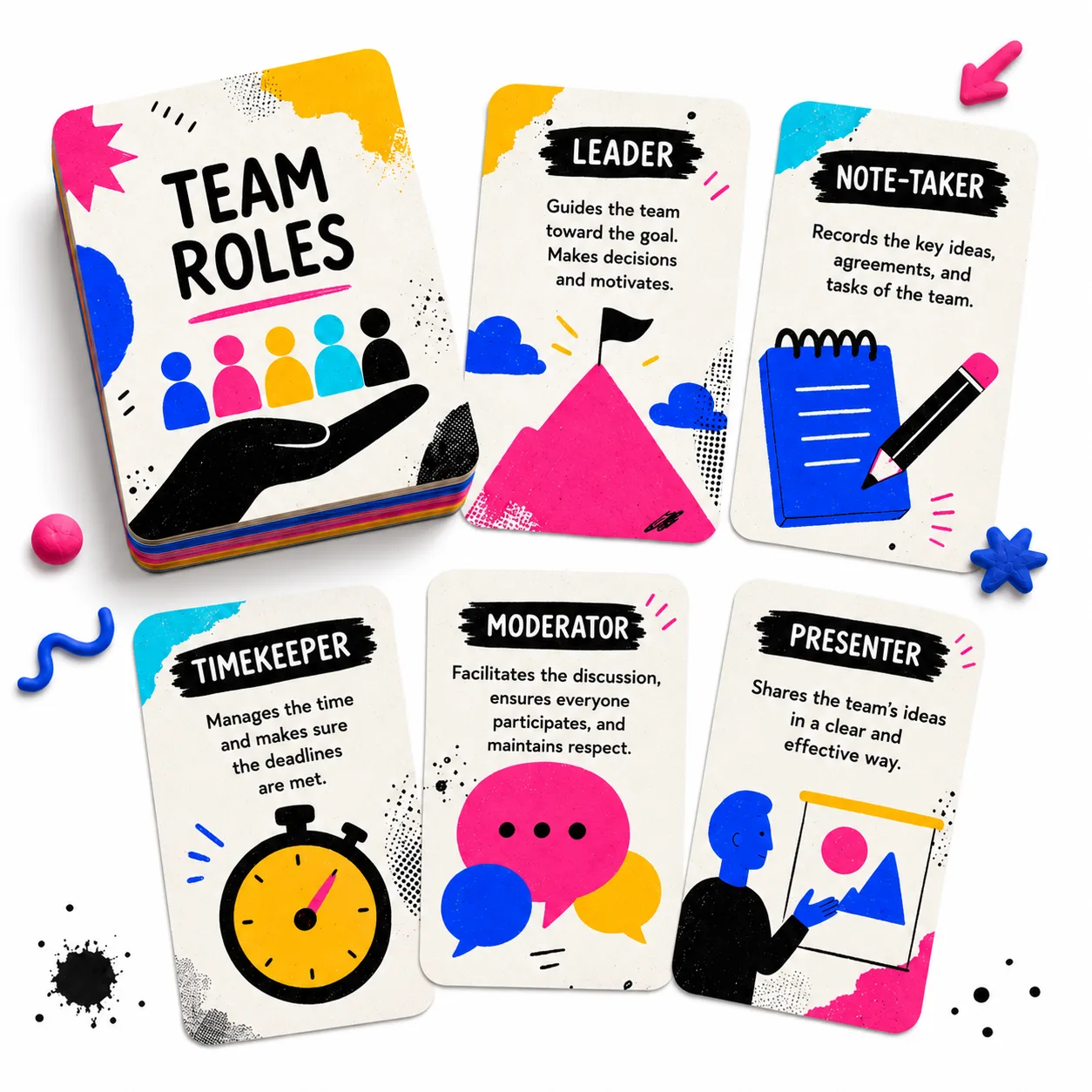
The kanban board organizes team work. Role cards distribute functions. The visual timer structures the time. The combination of these tools turns in-class time into a productive workshop, not a "do your homework in class."
Free tools for each moment
Exit Ticket (used at the start) — to verify preparation
In the flipped model, the exit ticket is used in reverse: at the start of class, not at the end. One question about the prior material that students answer in 2 minutes. The teacher reviews the responses immediately and adjusts the class accordingly.
Comprehension Stoplight — to diagnose in 30 seconds
Students indicate green (“I understood the material”), yellow (“I have doubts”) or red (“I did not see it or did not understand it”). This gives an immediate visual map of the group. It is faster than the exit ticket and works well as a first filter before deeper verification.
KWL Chart — to connect home with class
Students complete the first two columns (“what I know” and “what I want to know”) with the prior material at home. In class, after the activity, they complete the third (“what I learned”). The KWL makes the connection between individual preparation and in-class work visible.
Kanban Board — to organize production time
When class is dedicated to producing, the kanban shows each team’s progress in columns: to do, in progress, done. It makes transparent who is advancing and who is stuck, and allows the teacher to intervene where it is really needed.
Role Cards — to structure group work
In a flipped class, group time is intense and brief. Roles ensure each member has a clear function from the first minute, without losing time negotiating who does what.
Visual Timer — to maintain the pace
Structures in-class time into visible blocks for everyone. “10 minutes to discuss, 15 to produce, 5 to present.” In a class where every minute counts, the timer prevents the activity from running over or coming up short.
Common mistakes when flipping the class
Believing that flipping the class means recording a video. The video is the medium, not the method. What defines the flipped classroom is what is done with in-class time. A teacher can flip the class with a two-page reading, a 5-minute podcast or an infographic — they do not need to become a content creator.
Not verifying if they prepared. If there is no consequence or verification, the prior material becomes “optional” in the student’s mind. The verification at the start does not have to be punitive — it can be a stoplight or a KWL — but it must exist.
Using in-class time to repeat the video. If half the class did not prepare and the teacher re-explains everything from scratch, the message is clear: preparation is not necessary. The alternative is to group: those who prepared start the activity, and the teacher works briefly with those who did not.
Flipping all classes from the first day. Flipping works better as a partial strategy at first. Flipping one class per week while students adapt to the format is more sustainable than a total change that generates resistance.
Prior material that is too long. A 30-minute video is not prior material — it is a recorded class. The material must be brief (5-10 minutes), focused on one concept and accompanied by a task that processes it. Less is more.
What competencies it develops
The flipped classroom does not only reorganize timing — it develops competencies that expository classes rarely activate:
- When a student organizes themselves to review the material before class, they are exercising self-regulation — the ability to manage their own learning process.
- When they complete a KWL and detect what they understand and what they do not, they are practicing metacognition — thinking about their own thinking.
- When they arrive at class prepared and choose how to approach a problem, they are developing initiative and proactivity.
- When they work with others applying what they processed individually, they are exercising collaboration.
- When they connect the prior material with the in-class activity and build new knowledge, they are practicing learning to learn.
These competencies develop because the model requires the student to be active before, during and after class — not only during.
How to start
Choose a topic that lends itself to being explained in a short video or brief reading. Prepare the material, design a verification task and plan the in-class activity. Do not try to flip everything from the start.
A 5-7 minute video or a one-page reading, accompanied by 2-3 questions the student answers before arriving at class. Without a task, there is no preparation.
Start class with a stoplight or exit ticket. Based on the results, decide whether to move directly to the activity or do a brief 5-minute re-explanation of the point that was not clear.
The key to the flipped classroom is not the technology or the video — it is designing in-class time so that it is worth having prepared.