The problem: being silent is not listening
A student finishes explaining their idea. The teacher asks: “Does anyone want to respond to what Sofia said?” Three hands go up. The first to speak says something that has no relation to what Sofia had just proposed. The second repeats exactly what Sofia said, as if it were their own. The third says something that Sofia had already said she did not agree with.
Nobody listened. Everyone waited for their turn to speak.
This is not a problem of bad intentions or lack of respect. It is that nobody taught them the difference between hearing and listening. Hearing is passive — the sound arrives. Listening is active — it requires processing what is said, relating it to what one thinks and responding to that, not to something else. And like every active skill, it is taught.
The theory behind the practice
Nichols and Stevens (1957) published one of the first systematic studies on listening and found that, immediately after listening to a ten-minute message, most people only retain 50% of what was said. Two days later, that percentage drops to 25%. The conclusion was that we listen with much less effectiveness than we think — and that this ineffectiveness is not fixed, but trainable.
Wolvin and Coakley (1988) distinguished five types of listening: discriminative, comprehensive, appreciative, empathic and critical. Comprehensive listening — understanding the other’s message — and empathic listening — capturing the emotional state behind the message — are the most relevant for the classroom, and both require deliberate practice to develop.
Gordon (1970), in his work on classroom communication, identified what he called “barriers to listening”: responding before understanding, evaluating while the other speaks, preparing the response while the other is still speaking. These barriers do not disappear on their own — it is necessary to explicitly teach how to recognize and overcome them.
Hearing vs. listening: the difference in practice
| Hearing | Listening | |
|---|---|---|
| What it does | Registers the sound | Processes the meaning |
| Where attention is | On what I am going to say | On what the other is saying |
| What it produces | A parallel response | A response that connects |
| Sign it occurred | “I think that…” | “I understand you are saying… and I would add…” |
| Is it taught | Not necessary | Yes, with deliberate practice |
The difference is not moral — it is not about being a “good classmate.” It is cognitive: responding to what someone said requires having processed what they said. If that does not occur, the exchange is not dialogue — it is a succession of monologues.
Four strategies for teaching it
The simplest and most powerful strategy: whoever wants to speak must first summarize, in their own words, what the previous person said. Not repeat verbatim — summarize. If the summary is incorrect, the teacher asks the one who spoke to clarify, not to scold the one who summarized.
This rule changes the dynamic immediately. Students stop preparing their response while the other is speaking — because they cannot know what they will need to summarize. Attention shifts from their own turn to what their classmate is saying.
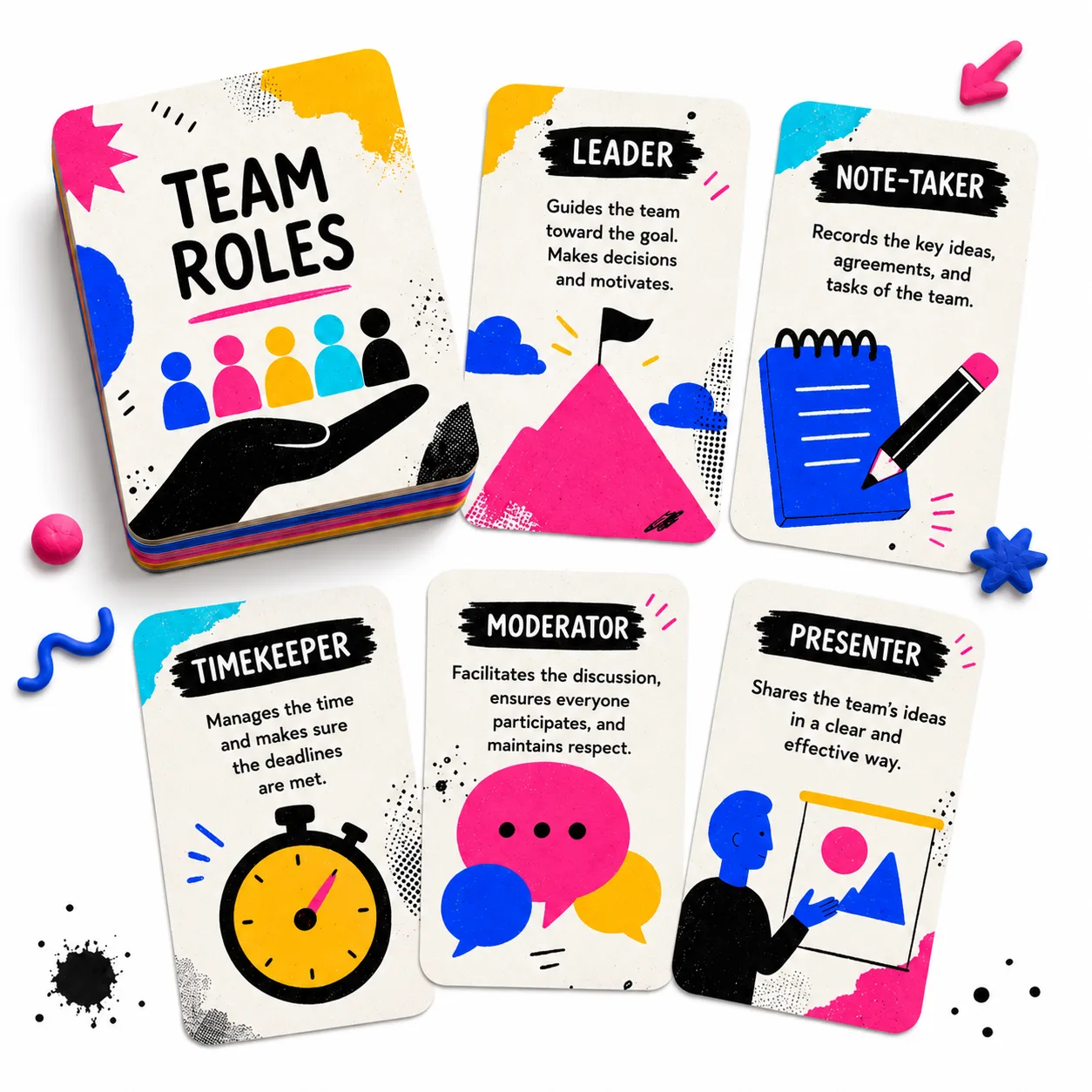
In group activities, assign with role cards the function of "synthesizer" — who at the end of the exchange summarizes what each member said — and "listening guardian" — who signals, without interrupting, when someone responds something unrelated to what was said.
The key is that the role rotates: everyone exercises it in different sessions. It is not about "the responsible one" listening — it is about listening being everyone's task.
When the exchange happens in writing, the logic of responding without listening breaks down: you have to read before writing. In a silent debate, students cannot ignore what the other said — it is there, on the screen or on paper, waiting for a response.
The silent debate trains listening in a format where the student controls the pace, not the speed of the conversation. It is especially valuable for students who in oral debate feel they do not have time to process.
Restorative practices use the circle with a talking piece — only whoever holds it can speak, the others listen. There are no immediate responses. Each person speaks when the object reaches them and may pick up what previous people said or not.
The circle is not only for resolving conflicts: it is a systematic listening practice. Incorporating it fortnightly, even for simple academic conversations ("what did you learn this week?"), builds the norm that speaking and listening carry equal weight.
Free tools for each strategy
Silent Debate — for listening without the pressure of improvising
It is the format that most directly trains listening because it eliminates the main barrier: the pressure of responding in real time. Students read, think and write. Each response remains visible so everyone can read it and respond to it. At the end, the teacher can point out which responses connected best with what others said — and which ignored what had already been said.
Connector Cards — for responding with visible listening
Connector cards offer structures that require connecting with the other before continuing: “I understand you are saying… and I would add…”, “What you said about… makes me think that…”, “I differ from your point about… because…”. Using these connectors is not just a linguistic exercise — it is evidence that listening occurred. You can see in the response whether the student listened or not.
I Used to Think, Now I Think — for making the impact of listening visible
Used at the beginning and end of an exchange. If what was thought before and what is thought after changed, it is because something heard got in. If nothing changed, the question is genuine: was there anything that made you think? This tool turns listening into a reflective experience — not just “I went through the conversation,” but “something I heard moved me or did not, and that also says something.”
Role Cards — for assigning listening as a concrete task
The synthesizer role is as legitimate as the recorder or timekeeper. Assigning it with a card removes the ambiguity: there is someone whose specific task during this exchange is to listen in order to summarize. This transforms listening from implicit expectation to explicit function.
Emotions Deck — for empathic listening
Before responding to someone, the student chooses a card that reflects how they think the speaker felt. This forces attention to the emotional dimension of the message, not just the content. Empathic listening does not ask “what did they say?” but “where did they say it from?” It is especially relevant in emotionally charged conversations or in work where students share personal processes.
Icebreaker Cards — for practicing in low-risk situations
Pair conversations with icebreaker questions are an ideal format for training listening without the pressure of debate or evaluation. The prompt is simple: when your partner finishes speaking, share something that what they said made you remember or think about. Not just anything — something related to what they said. That small twist turns a casual conversation into deliberate listening practice.
Common mistakes when working on listening
Confusing silence with listening. Asking for silence does not teach listening — it teaches waiting. Silence is a necessary but not sufficient condition. A student can be completely quiet and completely absent. Listening requires mental activity, not just stillness.
Correcting the speaker instead of modeling listening. When a student responds with something unrelated to what came before, the common reaction is to point it out: “You are not listening.” That identifies the problem but does not teach the skill. What teaches is modeling the difference: “Sofia said X, and you responded Y. How do they connect? Let me take a moment to see if I can find the connection…” The teacher who listens visibly teaches listening.
Not giving time to process. Active listening requires time that real conversation rarely gives. Strategies like “30 seconds of silence turns before responding” or “write one sentence before speaking” create that time artificially. Without that space, students respond on impulse — and the impulse is to ignore what the other said.
Working on listening only when there is conflict. If listening only appears as a resource in conflict (“you need to listen to each other better”), it becomes associated with tense situations. For it to be an everyday skill, it must be practiced in normal learning contexts: academic discussions, exchanges of ideas, group work.
Assuming good listening is a personality trait. “She is very empathic” or “he never listens.” Treating listening as a fixed characteristic instead of a teachable skill blocks the possibility of improvement. The evidence shows that listening is trainable — but that training must be explicit, systematic and sustained.
What competencies it develops
Teaching listening simultaneously activates competencies that few activities work on so directly:
- Whoever summarizes what the other said before responding is practicing active listening as a specific competency — not as a disposition, but as a technical skill.
- Whoever tries to capture the emotional state behind the words is developing empathy — the capacity to put oneself in the other’s place before judging.
- Whoever learns to read the tone, gesture and posture of the speaker is building nonverbal communication as a receptive competency, not just expressive.
- Whoever can contain the impulse to respond immediately and process what was heard first is exercising emotional regulation — managing the urgency to speak.
- Whoever understands that a team works better when everyone listens is integrating collaboration as a real practice, not just a slogan.
How to start
Introduce one single rule in class discussions: before responding, summarize in one sentence what the previous person said. Do not create a big protocol — just that rule, once, in an activity already planned. Observe what happens to the quality of the exchange.
Organize a silent debate on a curricular topic. Give each student two or three connector cards to use in their written responses. At the end, show two exchanges: one that connects with what came before and one that ignores it. The comparison makes the difference between listening and not listening visible.
Incorporate a brief circle every two weeks — fifteen minutes at the close of a class — with an open question related to the period's work. Rotate the talking piece. Do not correct or evaluate what is said: the goal is for the practice of listening while others speak to become a habit.
The progression matters: first install one simple rule, then give tools that make listening visible, then build spaces where listening is the central practice. Skipping the first two steps and launching a restorative circle in a group that has never listened intentionally produces exactly the same thing as before: polite silence while each person waits for their turn to speak.