Lateral Thinking
Techniques for thinking outside conventional patterns to find creative solutions by breaking mental habits.
What is it?
Lateral thinking is a concept created by Edward de Bono that proposes approaching problems from unconventional angles. Instead of following logic step by step (vertical thinking), the aim is to break patterns, challenge assumptions, and explore unexpected connections.
In the classroom, it means teaching students that there is more than one way to think about any topic. That the first answer is not always the best. That 'weird' ideas can be the most valuable. And that creativity is not a gift — it is a skill that can be trained.
De Bono developed concrete tools for practicing lateral thinking: Six Thinking Hats, provocations, the PO (Provocative Operation) technique, and lateral moves. These are systematic techniques, not magical inspiration.
You cannot dig a hole in a different place by digging deeper in the same place.
— Edward de BonoWhat does it look like in class?
The teacher presents a problem and asks for 3 solutions: one obvious, one crazy, and one that combines both. Students discover that the third is usually the most interesting.
Using the 6 hats, each group analyzes a proposal from 6 perspectives: data (white), emotions (red), risks (black), benefits (yellow), creativity (green), and process (blue).
The teacher launches an absurd provocation: 'What if schools had no schedules?' Students cannot say 'that's impossible' — they must explore the consequences.
In an inversion exercise, students think about how to make something go as badly as possible, then invert each point to find real solutions.
Signs it works
- Students propose ideas that surprise the teacher — they don't just repeat what's expected
- You hear phrases like 'What if we think about it backwards?' or 'What would happen if...?'
- Students question assumptions they previously took for granted
- The group generates more quantity and variety of ideas than before
- Students enjoy thinking — creativity generates energy in the classroom
Common mistakes
Confusing lateral thinking with 'saying anything' — it has structure and specific techniques
Evaluating ideas too quickly — premature judgment kills creativity
Only using lateral thinking in 'creative' subjects — it is equally valuable in math or science
Not giving time for divergence — generating many ideas requires a space protected from criticism
Key thinkers
Creator of the concept of lateral thinking and tools like Six Thinking Hats. Published more than 80 books on creative thinking.
Educator and author of 'The Element'. Argued that creativity is as important as literacy and that schools must cultivate it.
Author of 'A Whack on the Side of the Head'. Developed practical techniques to unblock creative thinking.
Dive deeper
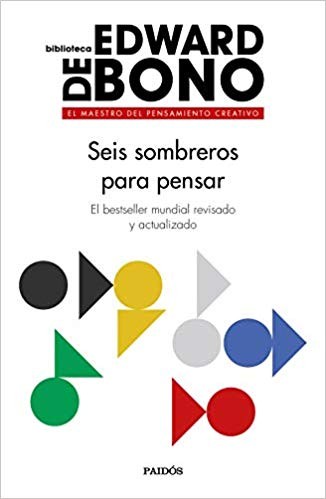 BookSix Thinking Hats — Edward de Bono
De Bono's classic. A concrete tool for organizing group thinking.
VideoKen Robinson — Do Schools Kill Creativity? (TED)The most-watched TED talk in history. Robinson explains why creativity should be central to education.
WebsiteDe Bono's Thinking Tools — Official SiteOfficial site with resources, training, and materials on De Bono's tools.
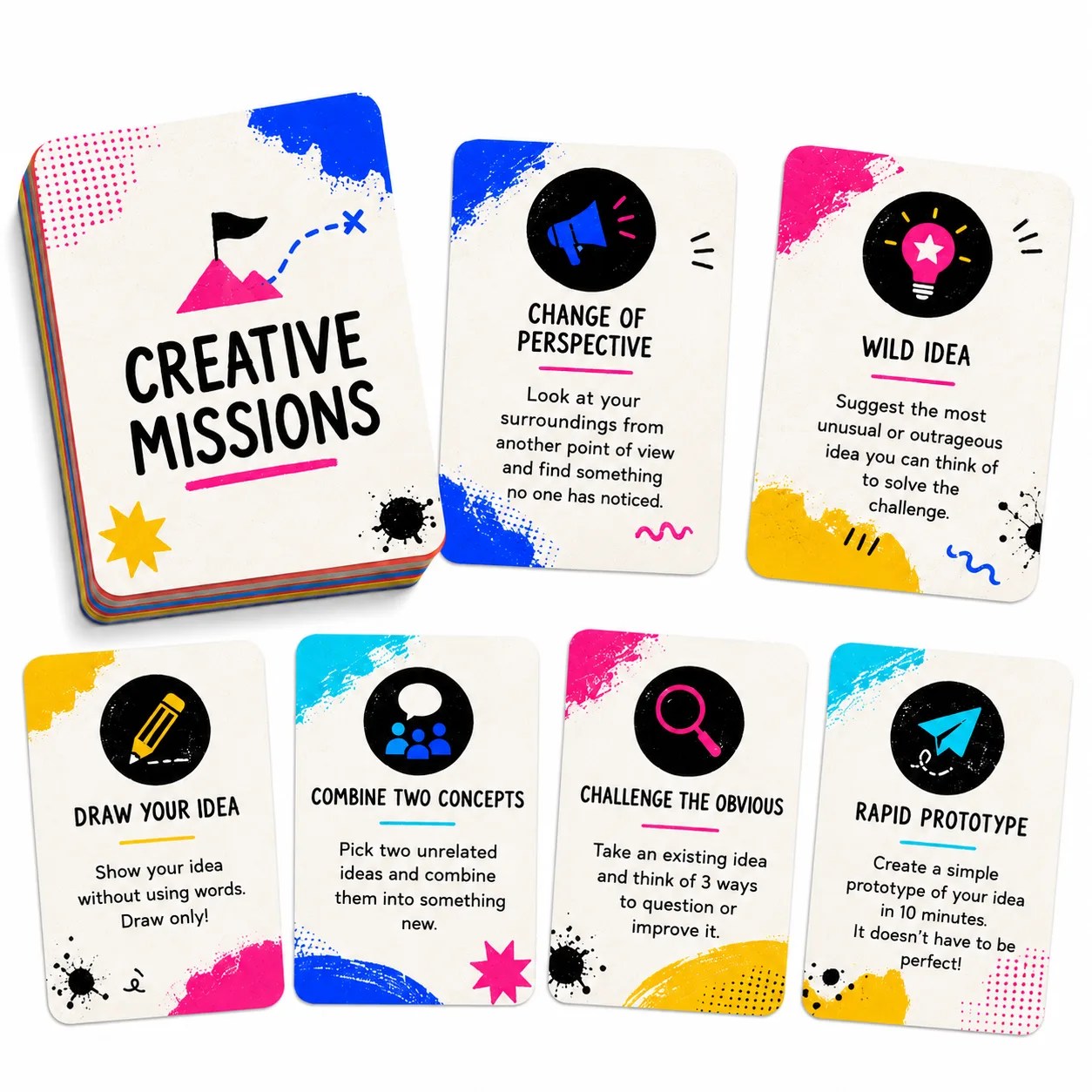 ToolCreative Mission Cards
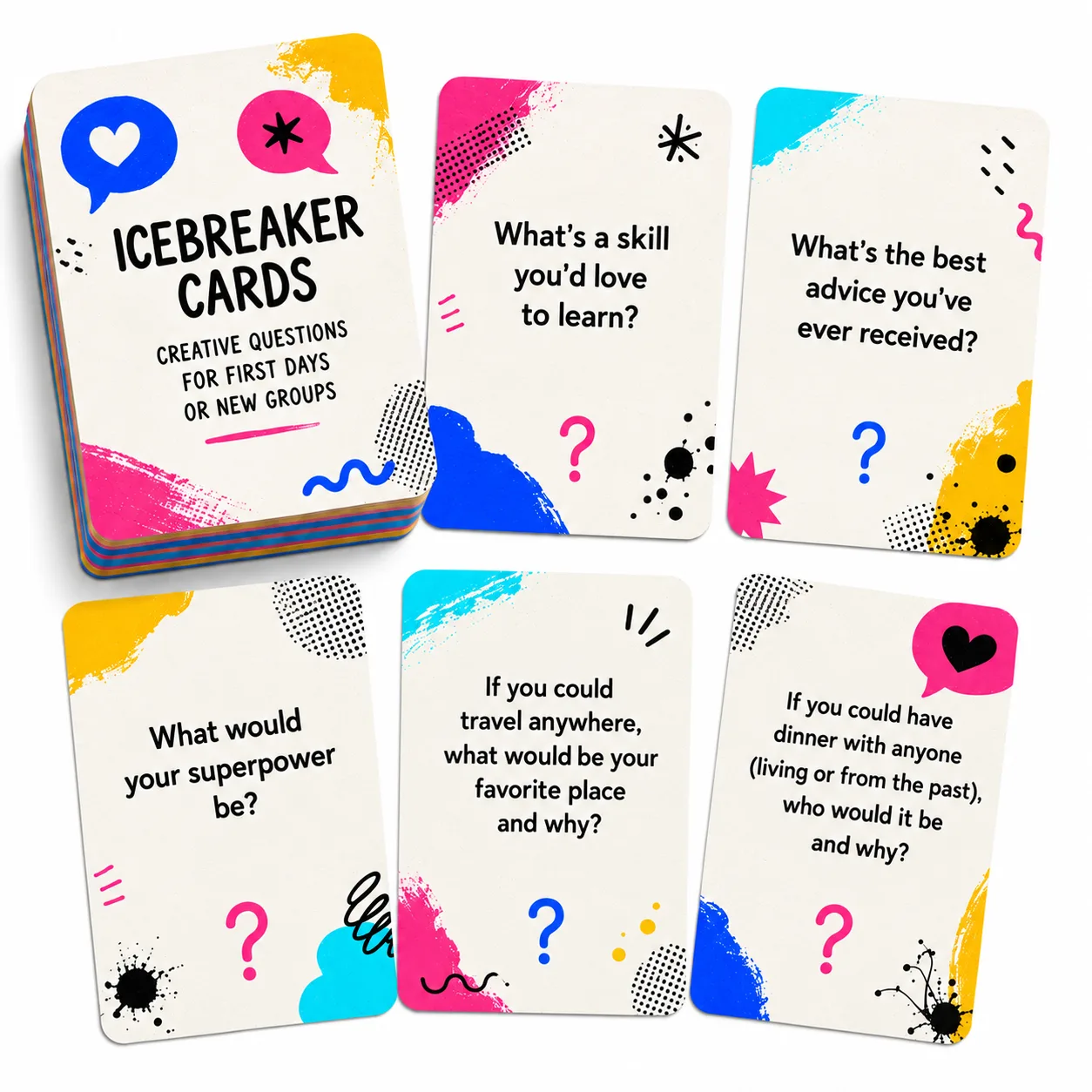 ToolIcebreaker Cards
 ToolQuestion Dice
 ToolCollaborative Ideas Wall