Metacognition
Think about your own thinking: know what you know, how you learn, and what you need to improve.
The real voyage of discovery consists not in seeking new landscapes, but in having new eyes.
— Marcel ProustMastery progression
Does not distinguish between knowing and not knowing. Does not plan before acting. Does not review their work spontaneously.
Starts to notice when they don't understand something. Plans with help. Reviews when asked.
Monitors their own learning process. Chooses strategies suited to the task. Identifies errors and corrects them.
Self-regulates their learning autonomously. Adapts strategies on the fly. Teaches others to reflect on how they learn.
- Say whether something felt easy or difficult after doing it
- Identify which topics they already know well and which they don't
- Follow a checklist to review their own work
- Plan before starting a task: what will I do, how, with what
- Monitor in real time whether they are understanding or getting lost
- Choose the most appropriate study strategy for each type of content
- Reflect on why they made an error and how to avoid it next time
- Design their own long-term learning plan
- Evaluate the quality of their own metacognitive strategies
- Guide others through processes of reflection on their learning
Questions that activate it
Tap a card to see the coaching guide
What was the hardest part of this task, and why?
Tap to flipForces post-task reflection. Finishing isn't enough — you need to know what cost you the most. This trains metacognitive awareness.
Tap to returnWhat strategy did you use, and did it work?
Tap to flipMakes the strategy explicit. Many students learn without knowing how they learned. Naming the strategy makes it reusable.
Tap to returnWhere did you get lost, and how did you realize it?
Tap to flipTrains real-time monitoring. The moment where the thread is lost is key: detecting it is pure metacognition.
Tap to returnIf you had to do this again, what would you do differently?
Tap to flipActivates retrospective evaluation. Very powerful at the end of a project or assessment. It's not self-criticism — it's learning.
Tap to returnHow do you prepare when you need to learn something new?
Tap to flipExplores the student's study strategies. Many have none or use only one. Opening the repertoire is the goal.
Tap to returnAt what point in the process did you feel most confident?
Tap to flipConnects metacognition with self-efficacy. Knowing when you are competent is just as important as knowing when you are not.
Tap to returnWhat type of task is hardest for you, and why do you think that is?
Tap to flipInvites self-diagnosis. The student starts identifying patterns in their difficulties. That's the first step to overcoming them.
Tap to returnCan you explain to me how you arrived at that answer?
Tap to flipAsking for the process — not just the result — trains thinking aloud. Key for math, science, and writing.
Tap to returnStudents who receive metacognitive training improve their academic performance by an average of 7 months above expectations, according to meta-analyses involving more than 100,000 students.
Education Endowment Foundation, 2021 — Teaching & Learning ToolkitIdeas for developing it
- Fill out a planner: What am I going to do? What do I need? How long will it take?
- Estimate the difficulty before starting and compare with reality afterwards
- Use the Comprehension Stoplight: green (I understand), yellow (doubt), red (lost)
- Monitoring pauses: every 10 minutes, am I understanding or running on autopilot?
- Complete I Used to Think / Now I Think to track shifts in understanding
- Write a brief learning journal: what did I learn, how did I learn it, what's still missing
- After a test, note which questions you were confident about and which you guessed
- Analyze errors: was it not knowing, not reading carefully, or rushing?
- Mark with a question mark what you don't understand while reading
- Summarize each paragraph in one sentence before moving on
- After group work, each person shares: what did I contribute? What did I learn from others? — see Self- and Peer Assessment
- Hold a reflection round: what strategy did each person use to solve this?
- Keep a weekly learning journal with guiding questions
- Review the journal once a month and detect patterns
- Exit Ticket with 3 metacognitive questions: what did I learn? how? what question remains?
- Weekly self-assessment routine with a simple rubric — see Thinking Routines
- Solve a problem explaining each step and each decision out loud
- Record an audio explaining how you study for a test and listen to it afterwards
Resources and tools
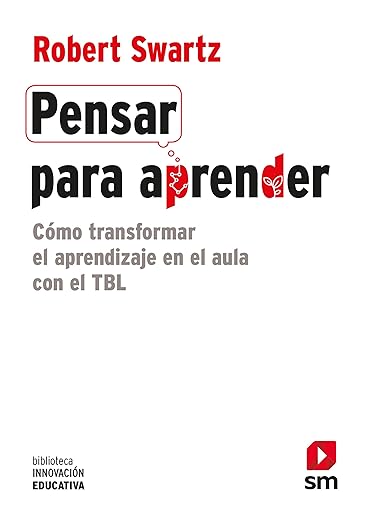 BookTeaching for Thinking — Robert Swartz
A guide for integrating visible thinking in the classroom. Thinking routines with scientific backing.
I Used to Think / Now I ThinkWebsiteVisible Thinking — Project Zero, HarvardResource from Harvard's Project Zero with downloadable thinking routines and examples.
Exit TicketESWebsiteMetacognition and Learning RegulationPractical articles on how to implement metacognition in the classroom with concrete activities.
Comprehension StoplightESVideoMetacognition ExplainedA short video explaining metacognition clearly. Ideal to share with students.
KWL OrganizerBloom CardsAgreement ScaleQuestion Dice