Cooperative Learning
Group work structures where each student's success depends on everyone's success, with defined roles and individual accountability.
What is it?
Cooperative learning is much more than putting students to work in groups. Groups without structure easily become one student doing everything while the rest wait. Johnson and Johnson formalized five conditions that transform a group into a team that genuinely learns together.
The five conditions: positive interdependence (no one finishes until the group finishes), individual accountability (each member has a verifiable role), face-to-face interaction, explicit social skills (the teacher teaches how to listen and disagree), and group processing (the team reflects on how it is functioning).
Slavin (1995) reviewed more than 100 studies and found that achievement benefits appear only when both positive interdependence and individual accountability are present. Without structure, group work produces inequality, not cooperation.
Cooperation is not simply sitting together. It is structuring the situation so that each person's success contributes to the success of others.
— David W. JohnsonWhat does it look like in class?
The biology teacher divides students into groups of 4 to study the human body systems using the Jigsaw method: each student is an expert on a different system. First, the experts from all groups meet to study their topic together. Then they return to their original group and each teaches what they learned. No one can pass without everyone having learned all the systems — that is real positive interdependence.
A teacher assigns rotating roles in each session: facilitator (keeps the group focused), recorder (documents decisions), timekeeper (announces when 5 minutes remain), spokesperson (presents to the rest of the class). Roles rotate each session. No student can permanently settle into a passive or dominant role.
Before a group task, the teacher spends 10 minutes explicitly teaching how to give a peer feedback. Students practice the phrase before working. Social skills are not assumed — they are taught. A group that doesn't know how to disagree without attacking won't cooperate, no matter how much it wants to.
At the end of each group session, teams answer three questions: What did we do well today? What can we improve? Is there someone we want to recognize? This group reflection closes the cycle and makes the team learn as much from the process as from the content.
Signs it works
- All group members can explain the complete work, not just the person who did it
- Students correct and consult each other before asking the teacher
- Groups identify on their own when someone is not participating and find ways to bring them in
- The teacher can randomly assign who presents and any member can do it confidently
- Groups reflect on their team dynamics, not just the final product
Common mistakes
Building groups without structure: group work without positive interdependence and individual accountability produces inequality, not cooperation
Leaving roles implicit: 'work together' is an instruction that favors those who already know how and marginalizes others
Evaluating only the group product: if only the final submission counts, there is no individual accountability and free-riding is guaranteed
Not teaching social skills: saying 'listen to each other' without modeling what active listening means is an empty instruction
Keeping the same groups all year: stable groups reproduce power dynamics; rotation allows everyone to work with everyone
Key thinkers
Brothers and pedagogues at the University of Minnesota. Developed the theory of cooperative learning and established the five essential elements. Their 50 years of accumulated research is the empirical foundation of the field.
Researcher at Johns Hopkins University. Developed the Team-Assisted Individualization model and systematically reviewed the evidence on cooperative learning. His meta-analyses are the most cited in the field.
Pedagogue who systematized 'Kagan structures': specific interaction sequences (Think-Pair-Share, Round Robin, Numbered Heads Together) that implement cooperation in a practical and replicable way in the classroom.
Dive deeper
Repository of cooperative methodologies and structures with practical examples for the classroom.
BookLearning Together and Alone — Johnson and JohnsonThe foundational text of cooperative learning. Presents the five essential elements with theoretical grounding and classroom examples. Required reading for any teacher who wants to implement the model rigorously.
BookCooperative Learning — Robert SlavinSystematic review of research on cooperative learning. Describes the most studied models (STAD, Jigsaw, Team-Game-Tournament) with effectiveness data.
WebsiteKagan Structures — Official SiteRepository of cooperative structures ready to use in the classroom. Includes descriptions, variations, and examples by subject and level.
ESPDFCooperative Learning in the Classroom — Pujolàs MasetPractical guide in Spanish on implementing cooperative learning. Includes simple structures to get started and guidance for teachers working with heterogeneous groups.
 ToolGroup Generator
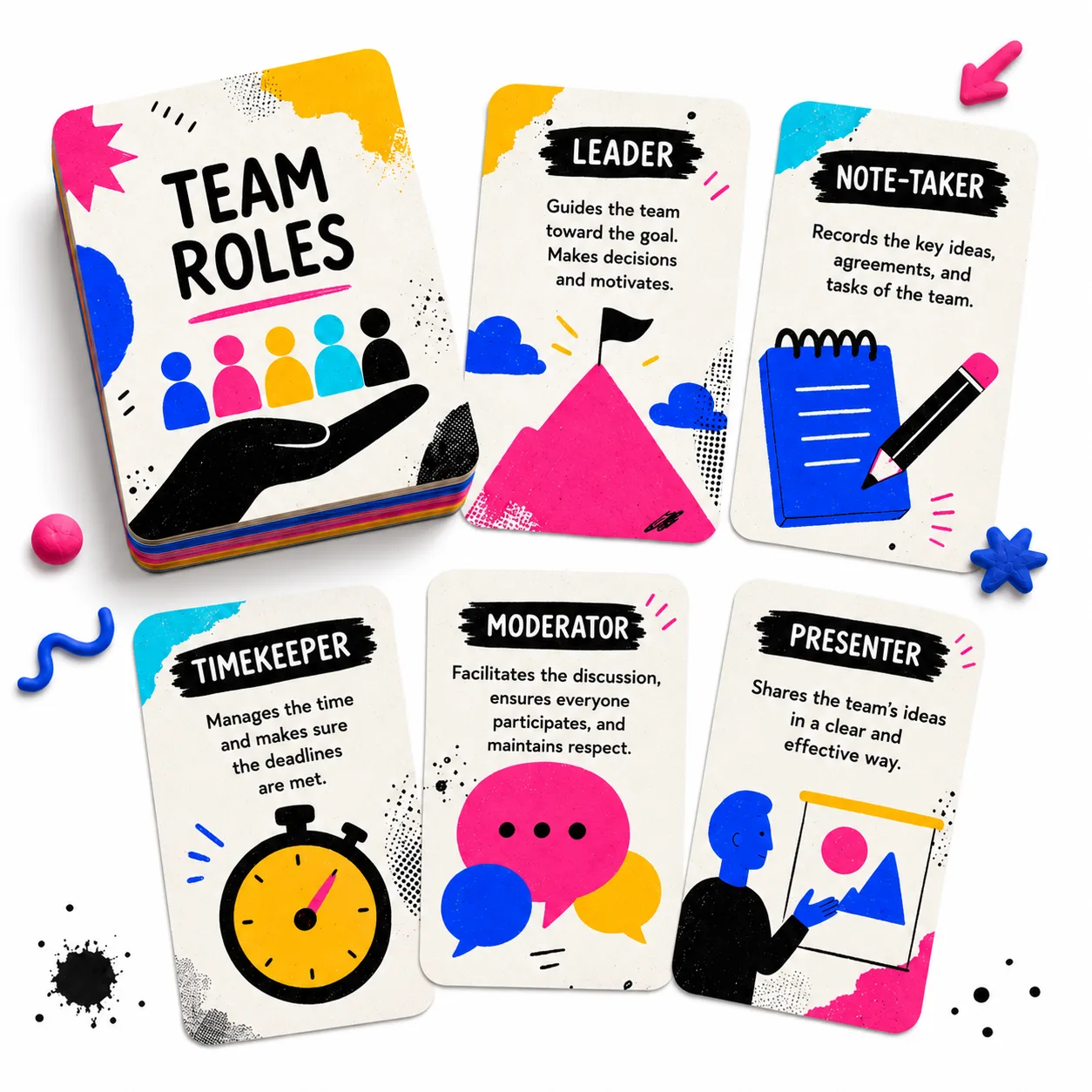 ToolRole Cards
 ToolSilent Debate
 ToolCollaborative Ideas Wall
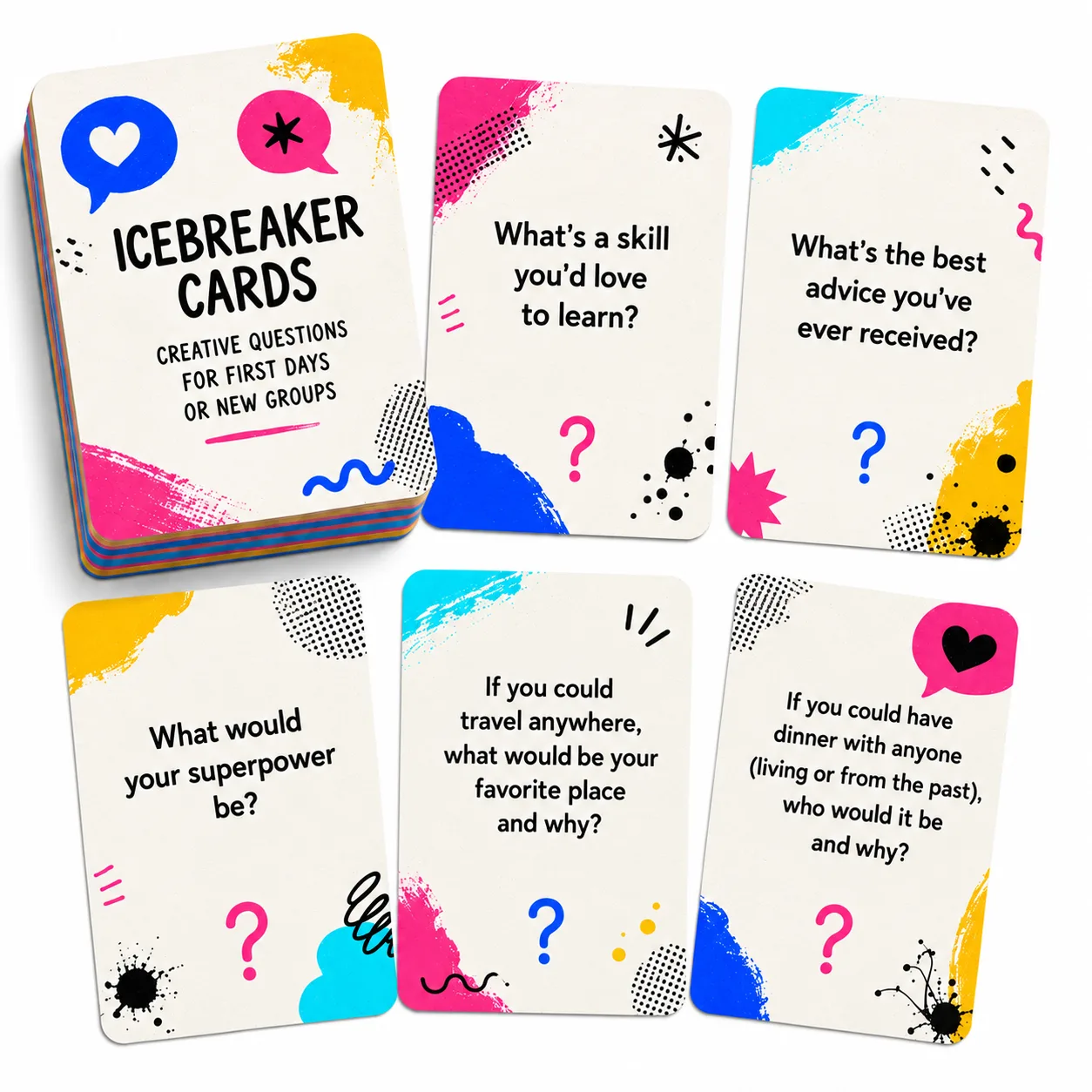 ToolIcebreaker Cards