Purposeful Gamification
Using game mechanics to motivate learning without losing the pedagogical focus.
What is it?
Purposeful gamification consists of applying game mechanics and elements (points, levels, challenges, narrative, immediate feedback) in learning contexts that are NOT games. The key is 'purposeful': gamification is not used for entertainment, but so that students engage more deeply with the content and persist in the face of difficulty.
Karl Kapp distinguishes two types of educational gamification: structural (the structure is gamified without altering the content — for example, a points and levels system to advance in a course) and content gamification (the content itself is transformed — for example, a simulation where students are scientists solving a mystery). The second is more powerful but harder to design.
Yu-kai Chou, creator of the Octalysis framework, identifies 8 core drives that motivate human action: epic meaning, development and accomplishment, creative empowerment, ownership and possession, social influence, scarcity and impatience, unpredictability and curiosity, and loss aversion. Effective gamification activates several of these drives, not just 'points and prizes' (which only appeal to accomplishment).
Gamification is not about making work feel like a game. It is about giving learning the same qualities that make good games irresistible.
— Karl KappWhat does it look like in class?
A history teacher transforms a unit on ancient civilizations into an 'expedition': teams are 'explorer societies', each class is a 'mission' with a challenge to solve, they collect 'artifacts' (badges for achievements), and at the end present their discoveries at a 'scientific congress'. The content is the same — the narrative frame changes everything.
In 6th grade math, a teacher creates a 'mastery levels' system: each topic has 4 levels (apprentice, journeyman, master, grand master). Students choose exercises of varying difficulty and advance at their own pace. They don't compete with each other — they compete against the challenge. Those who reach 'grand master' unlock the right to create problems for their classmates.
A science teacher uses a missions board: students choose from 10 activities of different difficulty and type (research, experiment, create, explain). Each mission gives points based on difficulty. Students chart their own learning path. There is no single route — there is agency.
In language arts, the class has an 'achievement wall' tracking collective milestones: '50 books read between all of us', '100 peer-reviewed texts'. Achievements belong to the group, not individuals. When they reach a goal, they unlock a privilege chosen by them (class outside, free reading day, etc.).
Signs it works
- Students choose to participate in optional challenges — motivation is intrinsic, not just for the points
- Students persist in the face of difficulty because the system shows them progress, not just the final result
- Academic content remains the center — game mechanics are the vehicle, not the destination
- Less participatory students get more involved because the system offers multiple ways to contribute
- There is narrative, challenge, and immediate feedback — not just a points system pasted over the same old thing
Common mistakes
Reducing gamification to a points and sticker system — that is a rewards system, not gamification
Creating toxic competition between students — well-designed gamification competes against the challenge, not against peers
Gamifying everything all the time — novelty wears off; use gamification at strategic moments
Forgetting the pedagogical purpose — if students earn points but don't learn, gamification has failed
Key thinkers
Creator of the Octalysis framework, which identifies 8 core drives of human motivation. His human-centered gamification approach goes far beyond points and prizes.
Author of The Gamification of Learning and Instruction. Distinguishes structural and content gamification, and connects game mechanics with learning theory.
Game designer and author of Reality is Broken. Argues that game mechanics can solve real problems and generate massive collaboration.
Dive deeper
 WebsiteGamification in e-learning: strategies, examples and tools — DEXPA
Complete guide to gamification applied to digital learning: mechanics, dynamics, tools, and real implementation examples.
BookThe Gamification of Learning and Instruction — Karl KappFoundational text on educational gamification. Distinguishes structural and content gamification with practical examples.
 ToolChoice Board
 ToolQuestion Dice
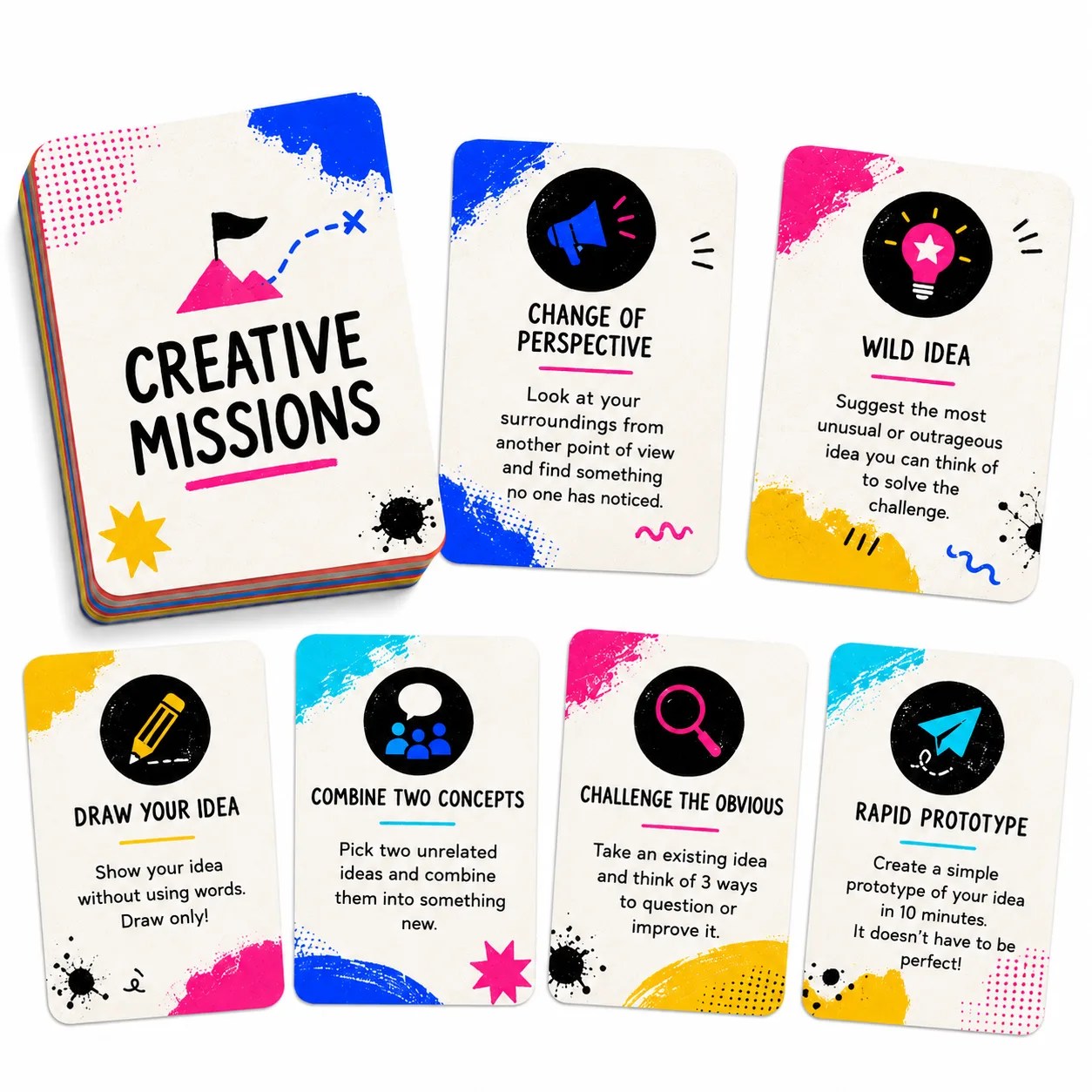 ToolCreative Mission Cards
 ToolVisual Timer