Philosophy for Children
Inquiry communities where students learn to think, question, and engage in philosophical dialogue.
What is it?
Philosophy for Children (P4C) is a program created by Matthew Lipman that transforms the classroom into a community of philosophical inquiry. Students don't study philosophy — they do philosophy. They learn to formulate deep questions, give reasons, listen, and change their minds.
Work begins with stimuli — stories, images, situations — that generate philosophical questions. Students choose which question to explore and build the dialogue together, with the teacher as a facilitator who gives no answers but deepens the thinking.
It is not about children reaching 'correct' conclusions. It is about developing critical, creative, and ethical thinking through dialogue. The process of thinking together is as important as any conclusion.
Thinking begins with wonder. And wonder begins with a question that really matters.
— Matthew LipmanWhat does it look like in class?
The teacher reads a short story and asks: What questions come to mind? Students generate questions and vote on which one to explore. The dialogue lasts 30-40 minutes without the teacher sharing their own opinion.
In an inquiry community, a student says 'I disagree with Juan because...' and another responds 'I build on what Maria said...' They use a vocabulary of thinking that they learn through practice.
The teacher facilitates with questions like: Could you give an example? Does anyone think differently? What would happen if that were true? Can we find a counterexample?
Students sit in a circle so everyone can see each other. An object (a ball, a stick) indicates who has the floor. Active listening is practiced as a central skill.
Signs it works
- Students listen to each other and build on each other's ideas
- You hear phrases like 'I agree with... because...' or 'I want to add to what was said...'
- Students change their minds during the dialogue and express it without embarrassment
- The questions students ask become progressively deeper and more abstract
- A climate of respect develops where all ideas are heard before being evaluated
Common mistakes
Turning the dialogue into a competitive debate where the goal is to win rather than understand
The teacher giving their opinion or guiding toward a predetermined conclusion
Not giving enough time for silence and reflection within the dialogue
Thinking young children cannot philosophize — from age 4, children can ask deep questions
Key thinkers
Philosopher and educator who created the Philosophy for Children program in the 1970s. Founded the IAPC (Institute for the Advancement of Philosophy for Children).
Co-founder of the P4C program alongside Lipman. Developed the idea of the community of inquiry as a transformative educational space.
Creator of Wonder Ponder, visual philosophy for children. Author of books that use provocative images to generate philosophical questions from age 3.
Dive deeper
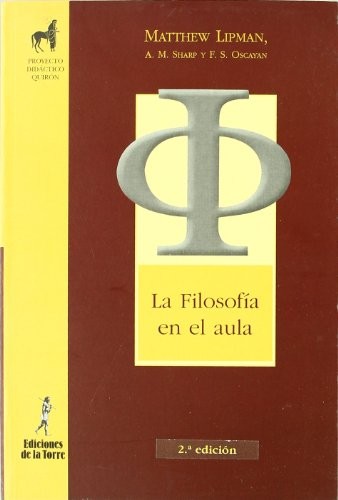 BookPhilosophy in the Classroom — Matthew Lipman
The foundational book of the P4C movement. Theory and practice of the community of inquiry in the classroom.
 BookBig Ideas for Curious Minds — The School of Life
25 great philosophical ideas told for children with illustrations.
WebsiteSAPERE — Philosophy for ChildrenLeading UK organization in P4C with resources and evidence of impact.
ESVideoPhilosophy for Children in the Classroom — VideoA real philosophy session with children showing how the community of inquiry works.
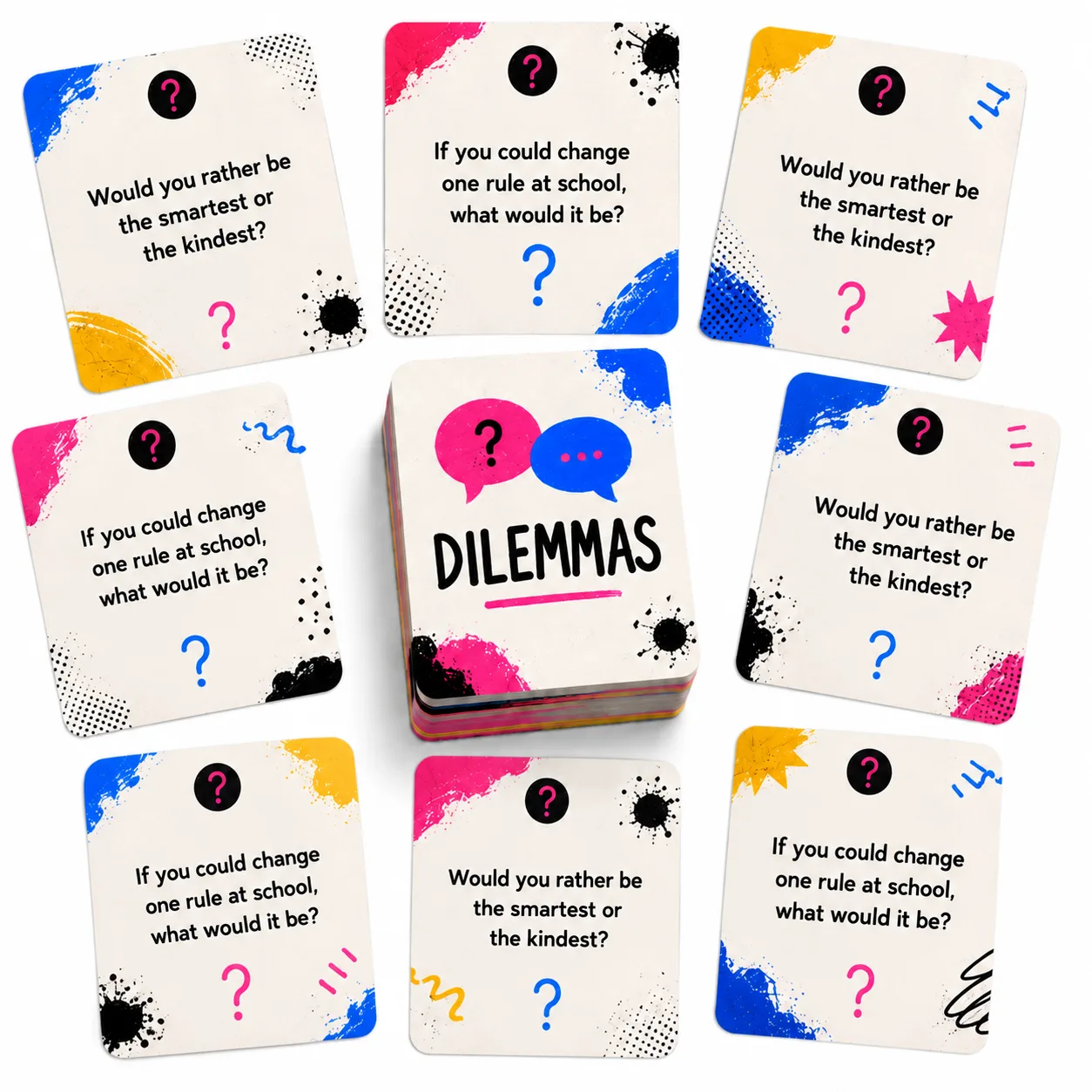 ToolDilemma Cards
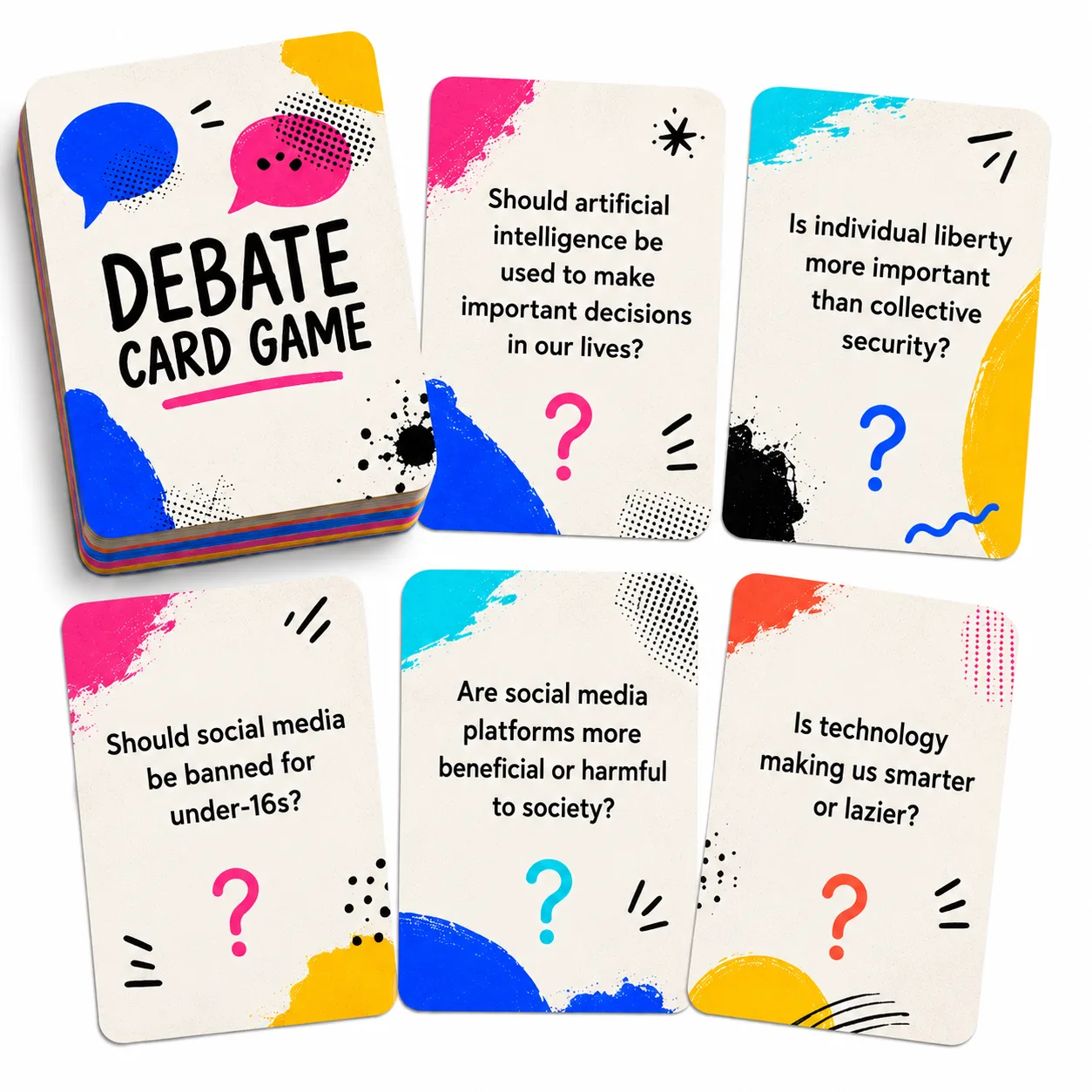 ToolDebate Cards
 ToolQuestion Dice
 ToolComprehension Stoplight