Culturally Responsive Teaching
Connecting learning with the cultural identity, experiences, and prior knowledge of each student.
What is it?
Culturally responsive teaching proposes that instruction is more effective when it connects with students' culture, identity, and experiences. It is not about adding 'multicultural topics' to an existing curriculum but about transforming how we teach so that all students see themselves reflected and valued.
Gloria Ladson-Billings defines three pillars: academic success (high expectations for all, without exception), cultural competence (students maintain and develop their cultural identity while learning), and critical consciousness (the capacity to question inequities and act to change them).
In diverse classrooms — by origin, language, religion, social class — this pedagogy recognizes that knowledge is not neutral. The examples, texts, historical narratives, and materials we use reflect a perspective. The question is: whose perspective? Who is represented and who is not?
Culturally relevant education uses the students' culture as a vehicle for learning.
— Gloria Ladson-BillingsWhat does it look like in class?
In history, the teacher does not teach only the official version. They include voices of indigenous communities, immigrants, and historically marginalized groups. Students research the history of their own family and community as a valid source of knowledge.
In language arts, literary texts include authors from diverse cultural backgrounds. Students write about their own experiences and those of their community. Each student's home language is valued as a resource, not an obstacle.
The teacher invites families and community members to share knowledge: cooking, crafts, traditions, music, oral narratives. This knowledge is connected with science, math, or art curricular content.
When a cultural conflict arises in the classroom — a discriminatory comment, a stereotype in a textbook — the teacher does not avoid it but turns it into an opportunity for critical learning. Why do we think that? Where does that idea come from?
Signs it works
- Students from different cultural backgrounds participate with equal confidence and leading roles
- Classroom materials reflect the real diversity of the school community
- Students bring knowledge from home and the community that the teacher values and integrates
- Stereotypes and single narratives are questioned naturally, not forcedly
- Families from different cultures feel welcomed and represented at school
Common mistakes
Reducing the cultural to folklore: celebrating typical foods one day a year is not culturally responsive teaching
Assuming all students from the same cultural background are the same — diversity exists within every group
Having high expectations only for some groups and low for others, disguised as cultural understanding
Avoiding difficult topics like racism or discrimination for fear of conflict — silence also teaches
Key thinkers
Creator of the concept of culturally relevant pedagogy. Her work transformed the way of thinking about diversity in the classroom.
Professor at UNED and leading reference for intercultural pedagogy in Spanish. Author of Pedagogía intercultural.
Researcher who evolved the concept toward culturally sustaining pedagogies: not just responding to culture but actively sustaining it.
Dive deeper
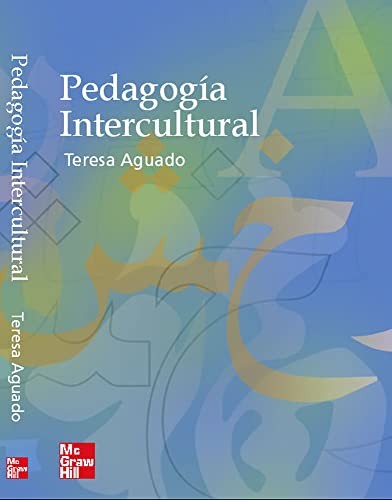 BookPedagogía intercultural — Teresa Aguado Odina
Fundamental Spanish-language reference on intercultural education. Theory and practice for teaching in contexts of cultural diversity.
ESWebsiteAula InterculturalSpanish portal with resources, experiences, and materials for working on interculturality in the classroom. Very complete and up to date.
WebsiteCulturally Responsive Teaching — NYUResources from NYU's MetroCenter on culturally responsive teaching. Theoretical framework and practical tools.
ESVideoIntercultural Education — UNESCOUNESCO video on the principles of intercultural education and its importance in today's world.
 ToolCollaborative Ideas Wall
 ToolWork Gallery
 ToolI Used to Think / Now I Think
 ToolSilent Debate