Punishment does not resolve conflicts
A student says something hurtful to another. The teacher intervenes: “Apologize.” The student says “sorry” without conviction. The other says “it’s fine” without believing it. The teacher continues with the class. The conflict was not resolved — it was silenced.
The next day, the problem continues. Or worsens. The student who was hurt is resentful. The one who caused the hurt does not understand what they did wrong. And the teacher feels they already “dealt with” the issue.
This sequence repeats thousands of times in schools. The problem is not a lack of sanctions — it is that the sanction repairs nothing. Punishment says “this is wrong” but does not teach what to do differently. Saying sorry without understanding the damage is an administrative act, not a repair. And sending the student to the principal’s office transfers the problem — it does not solve it.
Restorative practices offer a different logic: instead of asking “who is at fault and what punishment do they deserve?”, they ask “what happened, who was affected and what is needed to repair?”
The theory behind the practice
Restorative practices in education are based on restorative justice, a model originating in the criminal justice system (Zehr, 2002) that was later adapted to the school context by Morrison (2007) and Wachtel (2013). The premise is that conflicts damage relationships, and relationships are only repaired when the people involved actively participate in the solution.
Costello, Wachtel and Wachtel (2009) systematized a continuum of practices ranging from informal (affective statements in the moment) to formal (restorative conferences with all those affected). Their central finding: schools that implement restorative practices consistently reduce suspensions, expulsions and conflict recurrence significantly.
Jennings and Greenberg (2009) demonstrated that the teacher’s social-emotional competence is the most determining factor of classroom climate. A teacher who models emotional regulation — who names what they feel, who asks for a pause when frustrated, who listens before judging — teaches more about coexistence through example than through any formal program.
Punishment vs. repair: two opposing logics
| Punitive logic | Restorative logic | |
|---|---|---|
| Central question | Who is at fault? | What happened and who was affected? |
| Focus | The violated norm | The damaged relationship |
| Action | Sanction proportional to the damage | Repair agreed upon with those involved |
| Student’s role | Passive recipient of punishment | Active participant in the solution |
| Result | Obedience through fear | Responsibility through understanding |
| Long-term effect | Resentment, avoidance, recurrence | Understanding, empathy, prevention |
This does not mean there are no consequences. It means consequences are restorative instead of punitive. A student who broke something repairs it. A student who hurt with words actively seeks how to remedy the damage. The consequence is not “suffer what you deserve” but “do something to fix what was broken.”
The restorative continuum: from informal to formal
Level 1: Affective statements (in the moment)
The teacher names what they observe and what they feel, without judging:
- Instead of “Stop bothering!”: “When you talk while someone else is explaining, I struggle to keep the group’s attention and I get frustrated.”
- Instead of “That was wrong”: “When you said that, I saw them get upset. Did you notice?”
Affective statements are micro-interventions that take 30 seconds and prevent small conflicts from escalating. The structure is simple: When [behavior], I feel [emotion] because [impact].
Level 2: Restorative questions (brief conversation)
When the conflict has already occurred, the teacher uses restorative questions with those involved (5–10 minutes, apart from the group):
- What happened? (without interruptions — each one tells their version)
- What were you thinking at that moment?
- Who was affected by what happened? In what way?
- What do you need for this to be repaired?
The questions do not seek to identify culprits — they seek for each person to understand the impact of what happened and to propose a repair.
Level 3: Restorative circle (group)
When the conflict affects the group or is recurring, a circle is convened. Participants sit in a round (without tables in between). A talking piece is used — whoever holds it speaks, the rest listen. Icebreaker cards can open the circle with a safe question before entering the conflict.
Structure of the circle:
- Opening: connection question (“How are you arriving today?”) using the emotions deck
- Exploration: what happened? how did you feel? who was affected?
- Responsibility: what part is mine?
- Repair: what do we need to move forward?
- Agreement: what do we commit to doing?
- Closing: one closing word from each person
The circle is not a trial. There is no prosecutor or accused. There are people who share a community and need to rebuild coexistence.
Level 4: Restorative conference (serious conflicts)
For serious situations (physical aggression, sustained bullying, significant harm), a conference is organized with those involved, their families and a trained facilitator. This level requires specific training and generally involves the school leadership or the guidance team.
How to prevent before repairing
The best restorative practice is the one that does not need to be used because the conflict was prevented. Three preventive practices:
Once a week, 15 minutes in a round. Not to resolve conflicts — to build relationship. Simple questions: "What was the best part of the week?", "What do you need from this group?", "Is there anything you want to say?" The opinion thermometer can quickly measure "How do you feel in this group?" at the start of the circle.
Not the ones written in September and forgotten in October. Agreements that are reviewed monthly: "Are we keeping what we agreed?" using an agreement scale. If the average drops, the conversation opens: what is happening?
Naming emotions is not weakness — it is information. "I am frustrated because this isn't working" is more useful than throwing the notebook. The emotions deck as a start-of-class routine normalizes that everyone — including the teacher — has emotions and names them.
Free tools for each moment
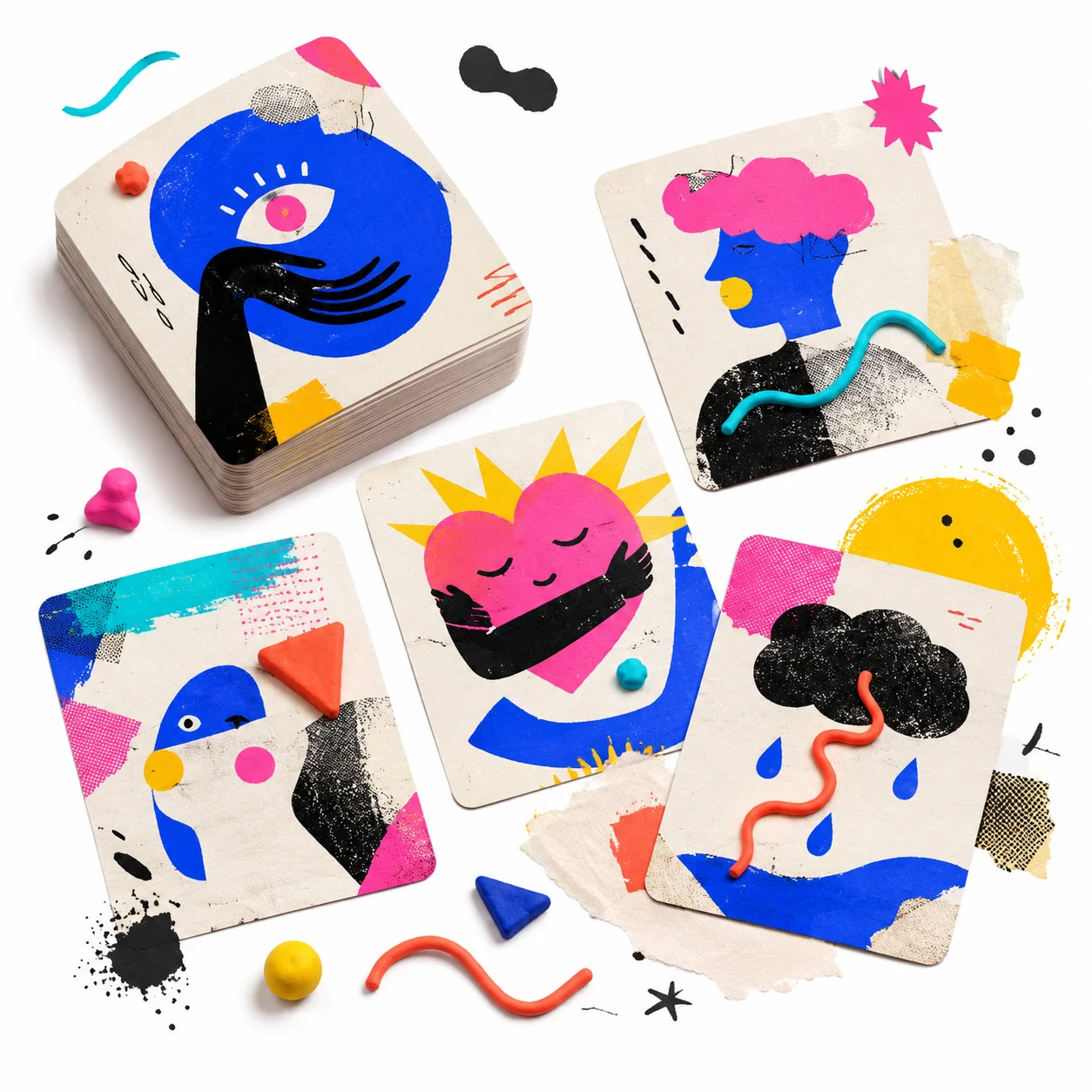
Emotions Deck — for naming what is happening
In the middle of a conflict, the question “How do you feel?” often generates a defensive “I don’t know” or “fine.” Emotion cards offer a visual repertoire: the student points instead of verbalizing. It is especially useful for younger students or those with difficulty naming emotions. It also works as a ritual to open circles: each person chooses a card and shows it.
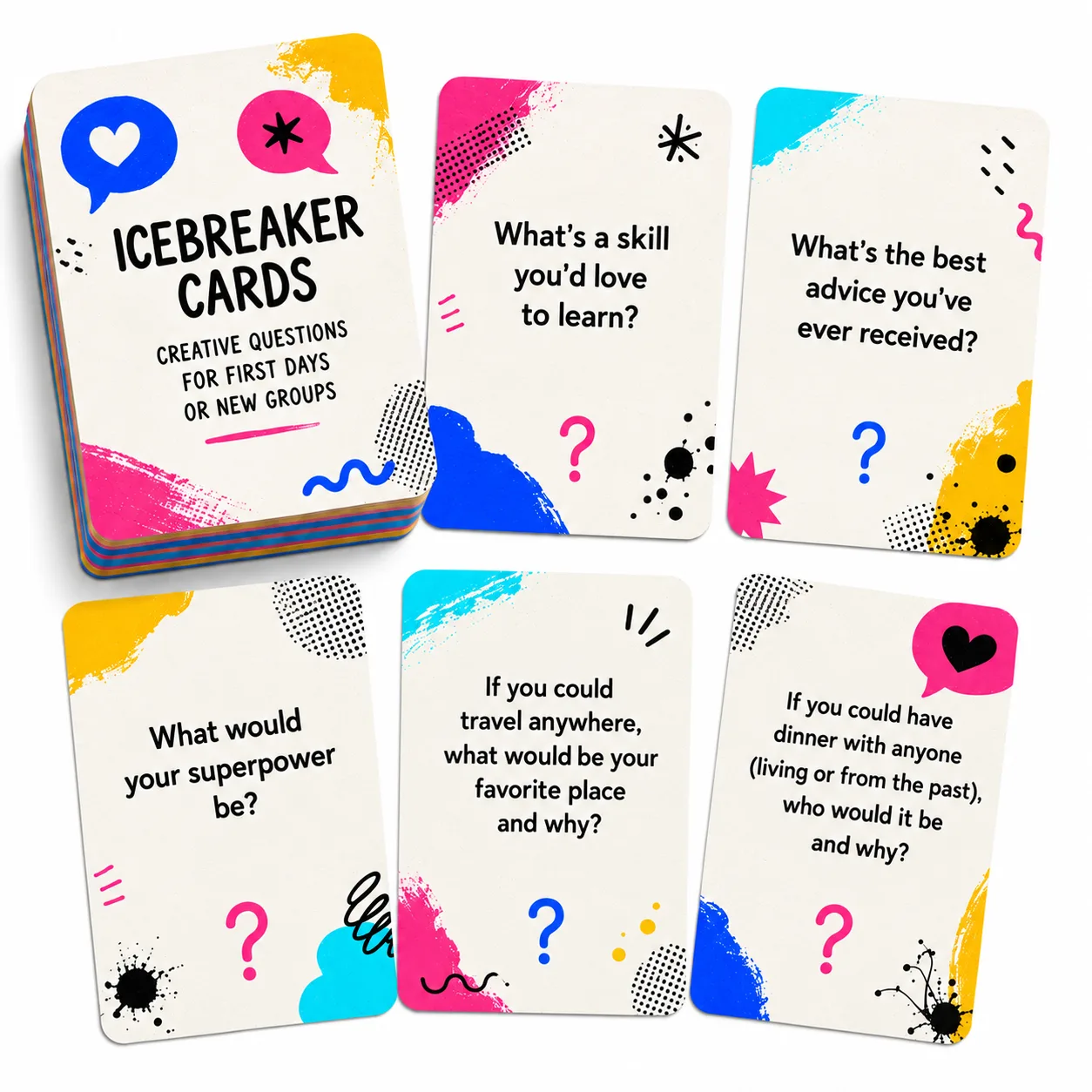
Icebreaker Cards — for opening restorative circles
Before addressing a conflict, it is necessary to create a safe space. Icebreaker cards offer questions that build trust: “What makes you feel safe in a group?”, “When was the last time someone really listened to you?” These questions prepare the emotional ground for difficult conversations.
Collaborative Ideas Wall — for collecting all voices
When a conflict involves many students (a widespread coexistence problem, an incident affecting the whole class), the wall allows everyone to express what they saw, what they felt and what they need — anonymously. This collects perspectives that would not emerge in a group conversation, and gives the teacher a complete map of the problem.
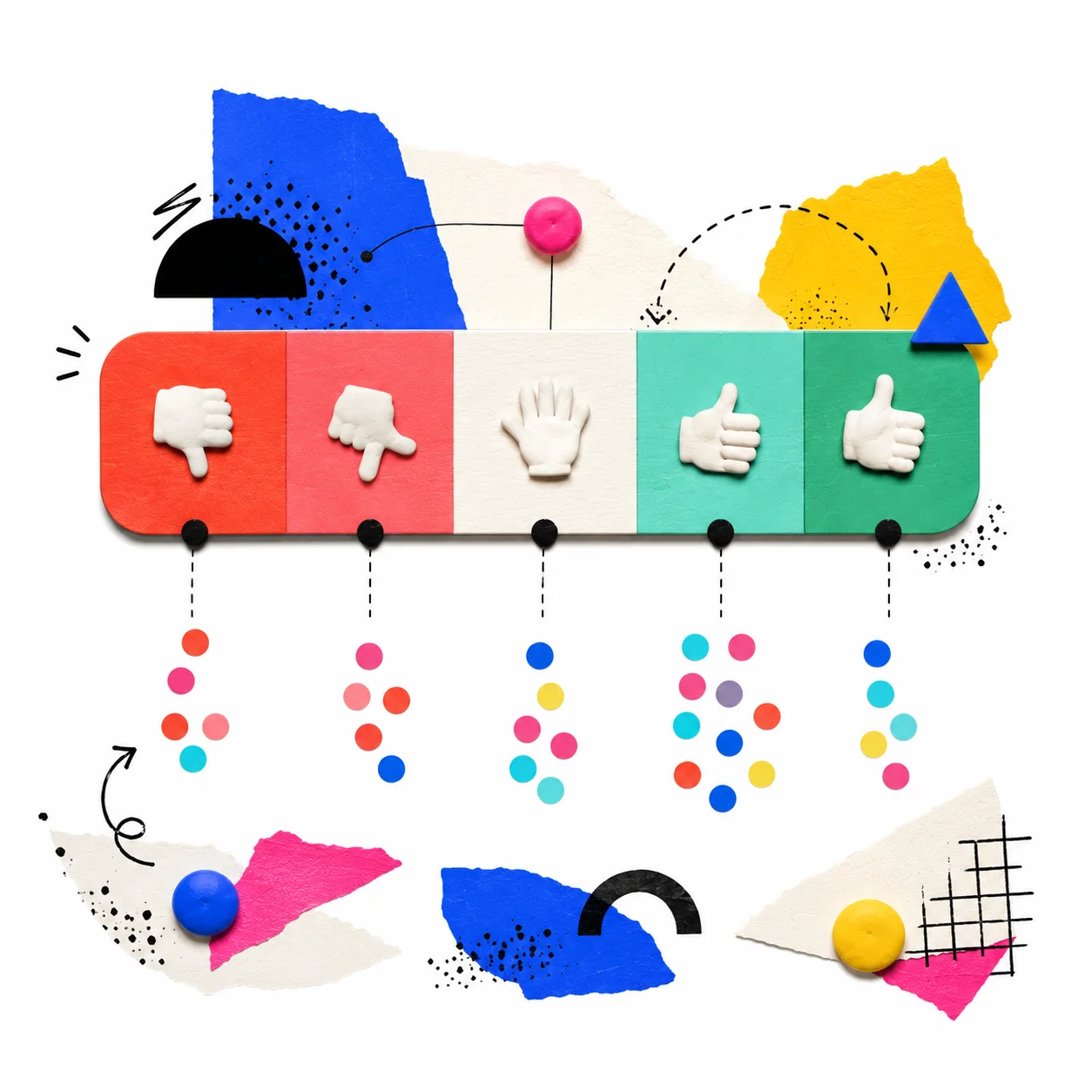
Opinion Thermometer — for measuring the climate
After a conflict and its resolution, the thermometer allows checking: “How resolved does this feel?” The visual distribution shows whether the repair was sufficient or if there is still discomfort. It also works as a preventive tool: a weekly group climate thermometer detects problems before they escalate.
Agreement Scale — for reviewing coexistence agreements
“How much do you agree that we are keeping our agreement to listen without interrupting?” (1 to 5). If the average drops, the conversation activates naturally. The scale turns abstract agreements into concrete data and legitimizes the review: it is not the teacher saying “you are not keeping up” — it is the students themselves evaluating each other.
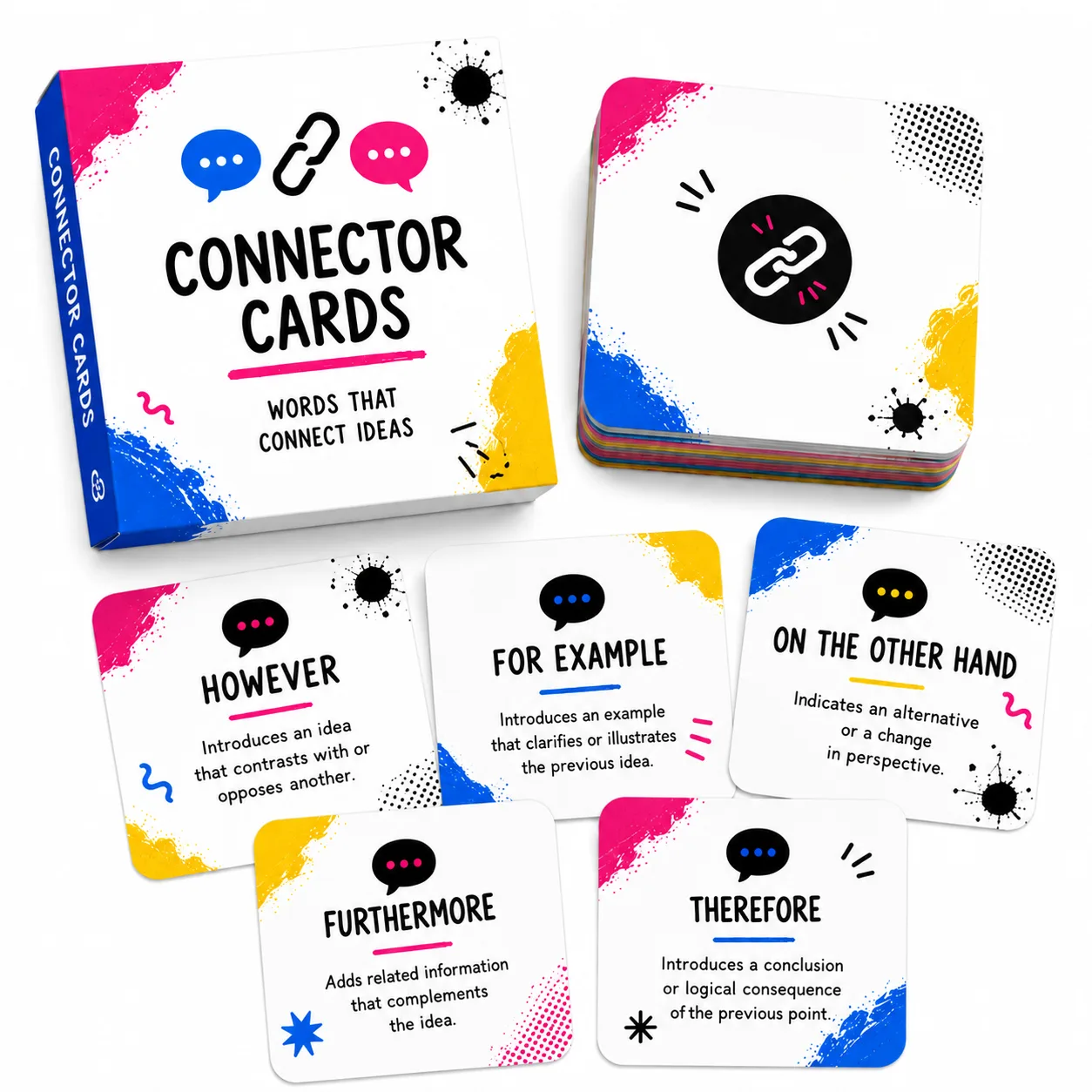
Connector Cards — for giving structure to dialogue
“When [this] happened, I felt [this] because [this], and what I need is [this].” This structure, offered with connector cards, transforms vague complaints into clear communications. “Everything bothers me” becomes “When they took my chair, I felt embarrassed because everyone laughed, and I need it not to happen again.”
Common mistakes when addressing conflicts
Searching for the absolute truth. In a conflict between two students, there are at least three versions: one’s, the other’s and the one nobody saw. Restorative practices do not seek “the truth” — they seek for each person to understand the impact of their actions and commit to a repair.
Forcing the apology. “Say sorry” produces empty apologies that generate cynicism. Genuine forgiveness comes — if it comes — after the person who caused the harm understands what they did and actively repairs. It cannot be ordered.
Resolving the conflict for them. “You do this, you do that.” When the teacher dictates the solution, students do not learn to resolve conflicts — they learn to wait for an adult to resolve them. Restorative questions guide, but the solution is proposed by those involved.
Applying restorative practices only for serious conflicts. If restorative practices only appear when there is a fight, they become associated with punishment. Affective statements and preventive circles build the culture that makes repair possible when it is truly needed.
Ignoring the conflict hoping it resolves itself. Some conflicts dissipate on their own. Many do not. Those that are ignored tend to escalate. A small conflict not addressed today can become a serious situation next week.
What competencies it develops
Restorative practices not only resolve conflicts — they teach how to live together:
- When a student identifies and names what they feel in the middle of a conflict, they are practicing emotional regulation — the capacity to recognize emotions without being dominated by them.
- When they listen to the other’s version and understand that their action generated an impact they did not anticipate, they are exercising empathy — understanding the other’s perspective from within.
- When those involved reach a repair agreement without the teacher imposing it, they are practicing negotiation and mediation — finding solutions that work for both parties.
- When the whole group listens in a circle without interrupting, respecting the talking piece, they are developing active listening in its most demanding form.
- When they propose a concrete repair and carry it out, they are exercising problem-solving applied to real life — not an abstract exercise.
How to start
The next time a student does something disruptive, replace the reprimand with a statement: "When you do that, I struggle to continue and I get frustrated." Do not expect an immediate change — it is a seed. Practice 3 affective statements per day for one week.
The next time there is a conflict between two students, instead of sanctioning, take them aside and ask the 4 questions: what happened? what were you thinking? who was affected? what do you need to repair? Observe the difference in the outcome.
15 minutes, in a round, with a talking piece. The first time will be awkward. By the third, students will start saying things they have never said. By the sixth, the classroom climate will be different.
Conflicts are not the enemy of learning — they are learning opportunities disguised as problems. The question is not how to eliminate them, but how to use them to teach what no textbook can teach: how to live with others.