Systems Thinking
See the connections between the parts of a system and understand how they affect each other.
You can't understand a system by looking only at its parts. The essence of a system lies in the connections.
— Donella MeadowsMastery progression
Sees elements in isolation. Does not detect relationships between parts. Looks for simple, direct causes.
Starts to notice relationships between elements. Identifies some causes and effects. Struggles to see the full picture.
Maps relationships between parts of a system. Identifies feedback loops. Anticipates secondary effects.
Analyzes complex systems with multiple variables. Detects emergent patterns. Designs interventions that account for the whole system.
- Identify the parts of a simple system (e.g., an ecosystem, a team)
- Describe a direct cause-and-effect relationship
- Recognize that changing one part affects others
- Map multiple relationships between parts of a system
- Identify feedback loops (positive and negative)
- Anticipate non-obvious consequences of an action
- Distinguish symptoms from root causes
- Model complex systems with interdependent variables
- Design interventions that improve the system without generating adverse effects
- Analyze social, economic, and environmental systems in an integrated way
Questions that activate it
Tap a card to see the coaching guide
What else is affected when this changes?
Tap to flipExpands the student's view beyond the immediate effect. Every action has secondary effects. Ask them to map at least 3.
Tap to returnWhat are the parts of this system?
Tap to flipFirst step in systems thinking: identifying components. This could be an ecosystem, a classroom, a city, or a social problem.
Tap to returnWhat connects these parts to each other?
Tap to flipAfter listing the parts, the next step is seeing the relationships. Use arrows, lines, diagrams. Make the connection visible.
Tap to returnIs this a cause or a symptom?
Tap to flipTrains the distinction between root causes and surface manifestations. Very powerful for social conflicts and recurring problems.
Tap to returnIs there a cycle that keeps repeating?
Tap to flipIntroduces feedback loops. Example: more stress → worse performance → more stress. Detecting the loop is the first step to breaking it.
Tap to returnWhat would happen if we removed this piece from the system?
Tap to flipA thought experiment to evaluate the importance of each component. Helps understand dependencies and vulnerabilities.
Tap to returnFrom what perspective are you looking at this?
Tap to flipEach actor in the system has a partial view. The student learns that their perspective is not the only one. Ideal for social topics.
Tap to returnHow was this system before, and how could it be in the future?
Tap to flipIntroduces the temporal dimension. Systems change. Thinking about their evolution helps understand present dynamics.
Tap to returnSystems thinking is one of the least-taught but most in-demand skills of the 21st century. The World Economic Forum includes it among the 10 key competencies for 2030.
World Economic Forum, 2020 — The Future of Jobs ReportIdeas for developing it
- Create a connection map between the parts of a topic
- Draw arrows showing how a change in A affects B, C, and D
- Map an ecosystem: what happens if a predator disappears
- Trace the water or energy cycle from multiple entry points
- Analyze how an economic policy affects different sectors of society
- Map the causes of a historical event showing multiple connected factors
- Use ecosystem or city simulators where every decision has consequences
- Role-play where each student represents a part of the system and negotiates
- Analyze the classroom as a system: what happens if a student is absent, if there's noise, if the schedule changes
- Create a chain of consequences: if X happens, then Y happens, then Z happens...
- Choose a community problem and map all the actors and factors involved
- Analyze why a problem persists: what loop keeps it going?
- Create multi-level cause-and-effect diagrams
- Use Venn diagrams to show where different systems overlap
- Read a story and map how each character's actions affect the others
- Predict what would happen in the story if a character had made a different decision
Resources and tools
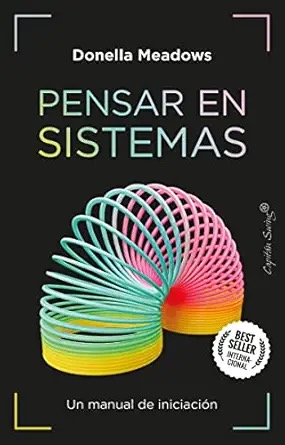 BookThinking in Systems — Donella Meadows
The reference book on systems thinking. Clear, deep, and full of everyday examples.
Cause-Effect DiagramWebsiteSystems Thinking in Schools — Waters FoundationResources and tools for implementing systems thinking in the classroom, from primary through secondary.
Venn DiagramESVideoSystems Thinking — SproutsAn animated video explaining the principles of systems thinking in an accessible way.
KWL OrganizerWebsiteThe Iceberg Model — EcoliterateThe iceberg model for analyzing problems: events, patterns, structures, and mental models.
Collaborative Idea WallKanban BoardBloom Cards